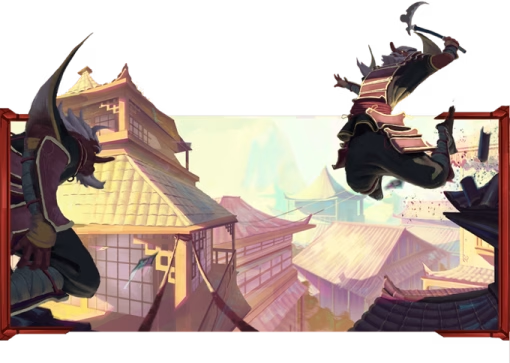
Step Into Exandria – the exciting world of Critical Role!
Exandria is the beloved fantasy setting of the wildly successful Critical Role live play. It has many of the trappings of high fantasy, but with its own detailed world-building, some of which runs against the tropes of Tolkien-descended fantasy.
Created by Matt Mercer, this land teems with ancient ruins, powerful relics, and sprawling civilizations, offering endless epic storytelling opportunities. Exandria blends high fantasy with moral complexity, making it perfect for adventurers seeking danger and discovery. Whether you’re a fan of Critical Role or exploring it for the first time, Exandria’s rich, fictional history provides a great backdrop for creating a nuanced, interesting, original character.
Why choose Exandria?

Epic stories await
Exandria’s rich history, from the Calamity to its divine relics, offers endless adventuring hooks and dramatic storytelling potential.
A setting for every playstyle
With diverse regions like Wildemount, Marquet, and Tal’Dorei, Exandria boasts locations for almost any story vibe.
Classic fantasy with a twist
Familiar elements like ancient ruins and magical artifacts blend with unique cultures, making Exandria feel fresh yet approachable for any group. There is also plenty to buckq the fantasy trend, like having most races be accepted as part of society at large, and the much more detached role of gods in society.
The geography of Exandria
Exandria is a world of striking diversity, where vast continents and untamed wilds blend with ancient ruins and bustling cities. From frozen tundras to sunlit deserts, its landscapes are shaped by the remnants of divine conflict and mortal ambition, offering endless opportunities for adventure and discovery.
- Wildemount: A land of political intrigue and ancient power, Wildemount is divided between the authoritarian Dwendalian Empire, the mysterious Kryn Dynasty, the pirate-filled Menagerie Coast, and the untamed Greying Wildlands. Adventurers can navigate shadowy conspiracies within the Empire, recover powerful Luxon artifacts in Xhorhas, or take to the seas for pirate treasure. However, they must beware imperial enforcers, Abyssal rifts spilling fiends into the Kryn lands, and the cutthroat rivalries of Menagerie Coast pirates.
- Tal’Dorei: A classic fantasy setting of heroics and exploration, Tal’Dorei boasts thriving cities, dangerous wilds, and the lingering legacy of legendary adventurers like Vox Machina. Players can forge their own legends by exploring ancient ruins, battling marauding giants in the Stormcrest Mountains, or navigating the political intrigue of Emon. Yet, dangers abound in the form of forgotten magical relics, powerful foes seeking revenge for past wrongs, and the still-smoking scars of a dragon’s wrath.
- Marquet: A desert continent of opulence and mystique, Marquet is anchored by the bustling city of Ank’Harel and surrounded by ancient ruins and harsh wilderness. Adventurers can immerse themselves in the vibrant culture of Ank’Harel, navigate tense political dealings among the city’s powerful factions, or explore the Rumedam Desert’s forgotten treasures. But the unforgiving sands conceal deadly creatures, ancient traps, and rival treasure hunters willing to kill for a prize.
- Issylra: A rugged, sacred land steeped in divine history, Issylra is home to ancient temples, isolated monasteries, and the venerable city of Vasselheim. Adventurers might seek enlightenment or divine relics in its holy sites or protect remote settlements from rampaging creatures. However, the land’s isolation breeds danger, from zealots who distrust outsiders to Abyssal incursions threatening its holy sanctuaries.
- The Shattered Teeth: A fragmented archipelago of mysterious islands, the Shattered Teeth is a haven for discovery and danger. Wild magic, forgotten relics, and perilous seas create this haven. Adventurers can brave the treacherous waters to uncover the secrets of ancient civilizations or establish new alliances with isolated island societies. Yet the dangers are many: reality-warping magic, feral beasts, and unpredictable weather make every step a potential last.
Famous folks of Exandria

The heart of Critical Role lies in its unforgettable characters—misfits, outcasts, and adventurers who come together to forge legendary stories. Across three campaigns, these diverse and deeply personal heroes have explored Exandria’s depths, confronted their pasts, and faced world-shaping challenges.
Critical role protagonists
- Vox Machina: Heroes of Tal’Dorei, famed for defeating the Chroma Conclave and stopping Vecna’s rise to godhood.
- The Mighty Nein: Wildemount’s outcasts who uncovered conspiracies, fought ancient powers, and mended fragile alliances.
- Bell’s Hells: Rising adventurers delving into Exandria’s divine mysteries and cosmic threats.
Historical and Political Figures
- The Champion of the Matron of Ravens: A mysterious hero who ascended with the Raven Queen during the Calamity, becoming her eternal servant.
- Zan Tal’Dorei: Founder of the Tal’Dorei Republic and a hero of the Calamity, whose legacy shaped the continent of Tal’Dorei.
- Vecna: A lich-turned-god, whose attempted ascension to ultimate power was thwarted by Vox Machina.
Religious and Divine Figures
- The Raven Queen: The enigmatic goddess of death and fate, pivotal to many of Exandria’s stories.
- The Betrayer Gods: Powerful entities like Tharizdun (the Chained Oblivion) and Lolth (the Spider Queen), exiled after the Calamity but still influencing the world.
- The Prime Deities: Benevolent gods like Pelor (the Dawnfather) and Sarenrae (the Everlight), worshipped and revered across Exandria.
Key Villains
- The Chroma Conclave: A coalition of ancient chromatic dragons that brought devastation to Tal’Dorei.
- The Briarwoods: Sylas and Delilah Briarwood, undead conspirators who usurped Whitestone and pursued necromantic power.
- Ludinus Da’leth: An archmage of the Cerberus Assembly, a secretive and manipulative organisation influencing Wildemount.
Prominent Allies and Mentors
- Allura Vysoren: A powerful archmage and ally to Vox Machina, integral to many major events in Exandria.
- Lady Kima of Vord: A paladin of Bahamut and companion to Allura, known for her bravery and fierce loyalty.
- Essek Thelyss: A drow mage from the Kryn Dynasty, whose relationship with the Mighty Nein evolved from betrayal to redemption.
Notable Organisations
The Ashari: Elemental guardians who protect rifts to the Elemental Planes across Exandria.
The Cerberus Assembly: A powerful and morally ambiguous group of mages shaping Wildemount’s history and politics.
The Claret Orders: Hunters of the undead and wielders of forbidden magic, protecting Exandria from supernatural threats.
Gods and Mythology
Exandria’s mythology is deeply intertwined with its history, with the gods playing a pivotal role in shaping the world and its fate. The divine conflict between the Prime Deities and the Betrayer Gods culminated in the Calamity, a cataclysmic war that nearly destroyed the world. The gods withdrew after this event, leaving mortals to rebuild. Their lingering influence continues to guide, tempt, or haunt the people of Exandria.
The Prime Deities
The Prime Deities are benevolent gods who seek to protect the balance of Exandria, though their withdrawal from the Material Plane limits their direct involvement. Some notable figures include:
- Pelor, the Dawnfather: A god of light, healing, and agriculture, worshipped widely by those seeking guidance and hope.
- Sarenrae, the Everlight: A goddess of redemption and the sun, often revered by those striving for second chances.
- The Raven Queen: The enigmatic goddess of death and fate, once a mortal who ascended to divinity, tasked with shepherding souls and preserving the sanctity of death.
- Erathis, the Lawbearer: A deity of civilization and invention, revered by rulers and architects.
The Betrayer Gods
The Betrayer Gods are malevolent deities who sought dominion over Exandria, ultimately sealed away after the Calamity. Despite their imprisonment, their influence persists through cults, relics, and forbidden magics. Key figures include:
- Tharizdun, the Chained Oblivion: A chaotic force of destruction and madness, whose cults work to release him from his bonds.
- Lolth, the Spider Queen: The scheming deity of chaos and deceit, worshipped by drow and manipulators.
- Torog, the Crawling King: A god of suffering and imprisonment, feared by mortals and often associated with underground horrors.
Divine Relics and Temples
The gods left behind relics and temples that mortals seek for power or understanding. Artifacts like the Vestiges of Divergence hold immense potential, but their use often comes with risks and responsibilities. Temples dedicated to gods provide opportunities for storytelling, whether as places of sanctuary, mystery, or conflict.
The political landscape of Exandria

Exandria’s political landscape is as complex and multifaceted as its geography, shaped by ancient rivalries, cultural divides, and power struggles. One of the most significant and volatile political tensions lies between the Dwendalian Empire and the Kryn Dynasty, two powerful nations on the continent of Wildemount, whose histories and ideologies clash profoundly.
The Dwendalian Empire
Government: An authoritarian monarchy ruled by King Bertrand Dwendal. The empire relies on strict laws, rigid hierarchies, and control over its citizens to maintain order and power.
Cultural Values: The empire promotes loyalty, hard work, and devotion to the empire’s institutions, including its church and military. Religion is heavily regulated, with the empire allowing worship of only six approved Prime Deities (known as the Exalted Collection). Worship of other gods is outlawed.
Economy and Expansion: The empire thrives on agriculture, industry, and trade, often annexing smaller territories to expand its influence. Its expansionist policies lead to frequent border conflicts.
Military Power: Boasts a formidable military, including an elite force known as the Righteous Brand, which enforces imperial law and secures borders.
The Kryn Dynasty
Government: A theocratic oligarchy led by the Bright Queen Leylas Kryn, who governs through faith in the Luxon, a mysterious divine entity worshipped by the Dynasty. The Dynasty’s leadership believes in reincarnation and unity under the Luxon’s light.
Cultural Values: The Kryn focus on faith, community, and enlightenment, with a deep connection to the Luxon’s beacons. Their culture revolves around the consecution, a process of reincarnating souls tied to the Luxon.
Society: Primarily made up of dark elves (drow), but the Dynasty is inclusive of other races who convert to its beliefs. The Kryn emphasize equality and spiritual growth over rigid hierarchies.
Military Power: The Kryn maintain a strong military presence, including the Umavi, their elite warriors, and utilise advanced magical technology tied to the Luxon.
Themes of the Conflict
The struggle between the Dwendalian Empire and the Kryn Dynasty encapsulates larger themes of Exandria’s political and social dynamics:
- Cultural Clashes: The ideological divide between authoritarianism and religious freedom.
- Faith vs. Dogma: The conflict highlights the tension between controlled, state-approved religion and personal, mystical spirituality.
- War and Reconciliation: The ongoing question of whether peace is achievable or if the nations are doomed to endless war.
This simmering tension continues to shape the political landscape of Wildemount, providing fertile ground for intrigue, diplomacy, and conflict in any campaign set in Exandria.
Races of Exandria
Some races differ from their typical representation in the Forgotten Realms and other settings. In some cases, the differences are subtle, but in others, we see a bigger departure.
- Drow (Dark Elves) – In Exandria, drow are not inherently evil or tied to Lolth. Instead, many drow live in Xhorhas, under the Kryn Dynasty, and worship the Luxon. Their culture is built around spiritual enlightenment, community, and the process of consecution (soul reincarnation). This makes them starkly different from the traditionally subterranean, Lolth-worshipping drow of the Forgotten Realms.
- Orcs and Half-Orcs – The cultural stigma often associated with orcs in the Forgotten Realms is reduced, creating opportunities for more diverse character arcs. This has now been adopted in 5.5e at large but was popularised in Critical Role
- Dragonborn – Dragonborn in Exandria have strong ties to the Draconian lineages and the ancient Chroma Conclave. Many dragonborn are descendants of those who served or opposed the Conclave, directly linking their history to the world’s draconic conflicts.
- Goblinoids – Many goblinoids live peacefully within Xhorhas or in isolated communities, with the Kryn Dynasty offering them a place to thrive and escape the negative stereotypes often associated with their kind.
- Aasimar – Aasimar in Exandria are tied closely to divine influences, often seen as rare and unique individuals chosen by the gods or connected to celestial events. Their divine heritage remains consistent with the Forgotten Realms but is more narratively tied to Exandria’s gods and the aftermath of the Calamity.
- Firbolgs – Firbolgs in Exandria retain their connection to nature but often have a stronger cultural association with the Ashari, elemental guardians who protect planar rifts. They also differ physically and resemble a kind of cow-folk, with flat noses and big wide set eyes.
Using Exandria in campaigns
Story Hooks and Themes
Exandria is a versatile setting that allows for a wide range of storylines, from epic battles to intimate character-driven narratives. Here are some ideas to inspire your campaign:
- Divine Interference: Explore what happens when gods, despite their withdrawal, meddle in mortal affairs through visions, relics, or divine champions.
- Political Intrigue: Delve into the shifting alliances and power struggles of Tal’Dorei, Wildemount, or Marquet. Perhaps the players must navigate the Tal’Dorei Council’s politics or uncover a Cerberus Assembly conspiracy.
- Cosmic Mysteries: Send your players to explore Aeor ruins, ancient floating cities, or sites tied to the Calamity. These places might hold forbidden knowledge or remnants of godly power.
- Moral Dilemmas: Challenge your players with decisions about power, sacrifice, and redemption. Will they wield a Vestige of Divergence responsibly, or will its power corrupt them?