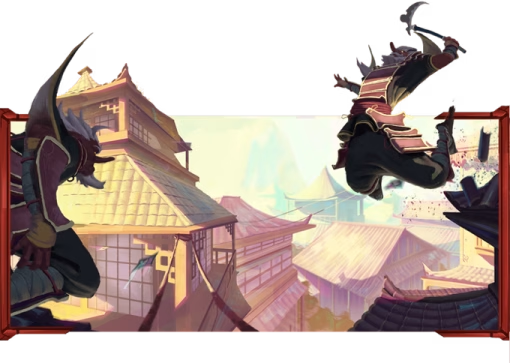
A setting of pulp action and intrigue
The world of Eberron is a stark departure from traditional fantasy settings associated with Dungeons & Dragons. Created by Keith Baker, Eberron was introduced as the winner of Wizards of the Coast’s “Fantasy Setting Search” in 2002. It brings a fusion of magic, technology, and noir-inspired intrigue to the D&D universe.
Unlike other settings such as the Forgotten Realms, which lean heavily into well-worn high fantasy, Eberron offers a unique world where magic is industrialised, the lines between good and evil blur, and war has left nations in a mess.
Eberron offers the perfect ground for storytelling for a group seeking a campaign that blends pulpy action, mystery, and a world where everything isn’t as it seems.
Why choose Eberron for you campaign?

Eberron’s hallmark is its divergence from the classic fantasy tropes. While settings like the Forgotten Realms evoke the feel of Tolkien-style fantasy, Eberron reimagines magic as a tool of industry, resulting in a world more similar to steampunk than high fantasy. Airships powered by elementals, lightning rail trains, and urban centers bustling with magical advancements define the setting.
The tone of Eberron is also distinct. It’s a world shaped by a brutal, century-long conflict known as the Last War, which only ended when a catastrophe so massive occurred, that the world was shocked into a tense peace.
The nations of Khorvaire are still reeling from the devastation, with espionage, fraud, and political tension running high. Unlike the clear-cut morality of other settings, Eberron thrives in shades of grey. Here, the villain isn’t always evil, and the hero isn’t necessarily good. Themes of noir-style intrigue and ambiguous morality permeate the setting, making it a great fit for campaigns focused on mystery, politics, and character development. This might be ideal for a group feeling they have become a little over-familiar with the Forgotten Realms and are looking for something quite different.
Eberron at a glance
Geography
Eberron’s primary continent, Khorvaire, is home to a wide range of cultures and environments. It is a land scarred by the Last War, where borders shift and new nations rise from the ashes of old kingdoms. To the east lies Aerenal, an ancient island ruled by elves who venerate their ancestors. Further east is the mysterious continent of Xen’drik, filled with ancient ruins and dangerous jungles, holding the remnants of lost empires.
In stark contrast to the monolithic landscapes of the Forgotten Realms or Greyhawk, Eberron’s geography is both familiar and alien. Towering spires and urban sprawl mark Sharn, the City of Towers, where skyscrapers and flying vehicles make the city a hub of innovation and mystery. The Mournland, once the thriving nation of Cyre, stands as a haunting wasteland shrouded in magical devastation—an ever-present reminder of the perils of unchecked power wielded for war.
Further afield, the Eldeen Reaches offer dense forests where druidic sects hold sway, blending nature and magic in unique ways. The Demon Wastes in the northwest is a desolate, haunted region filled with infernal dangers, remnants of the ancient rakshasa rajahs who once ruled the land. The Mournland, formerly Cyre, is a twisted, surreal land where the laws of magic and nature break down, presenting an eerie contrast to the more typical environments in other D&D settings.
Major Cities and Settlements
Sharn: The City of Towers is the largest and most iconic metropolis in Eberron. Its vertical structure is divided into different levels of wealth and influence and offers adventures ranging from high-society intrigue to gritty, crime-filled underworld exploits.
Stormreach: Located on the edge of the untamed continent of Xen’drik, Stormreach is a lawless city and a gateway to ancient ruins and forgotten secrets. Adventurers come here seeking treasure, but most only find danger.
Korth: The capital of Karrnath, a militaristic nation with a long history of using necromantic magic for labor and military persuits. Korth is a city of rigid discipline and military might, contrasting with the more cosmopolitan cities like Sharn. Its harsh cold, wet atmosphere has bred hardy and stoic people.
Plots
The fractured political landscape of Khorvaire provides a rich tapestry for intrigue. Espionage is a common theme, with powerful factions and Dragonmarked Houses vying for dominance over magical and technological advancements.
Adventurers may be hired to investigate the mysteries of the Mourning, seeking out magical artifacts of incredible power on behalf of a greedy corporation. They may become embroiled in the shadowy underworld of Sharn, trying to manipulate favors or information for leverage of their own, or on behalf of a crime family. Your party could even be trapped between the political differences of its members, unable to put down the differences formed in the war gone by.
Key historical events

The Last War: A Century of Conflict
The Last War, a century-long conflict that raged across the continent of Khorvaire, was initially a civil war among the Five Nations—Aundair, Breland, Cyre, Karrnath, and Thrane. These nations, once united under the Kingdom of Galifar, descended into conflict following the death of King Jarot, as his children fought to claim the throne. What began as a war of succession transformed into a devastating war that reshaped the entire continent.
The conflict was marked by shifting alliances, betrayals, and the debut of new powers. Early in the war, the five main factions fought for dominance, but as the conflict dragged on, other groups—like the nation of Darguun, the Lhazaar Principalities, the Talenta Plains, and even the monstrous Droaam—took advantage of the chaos to carve out their territories. The war also spurred big advancements in magic and technology, including the development of elemental airships, the lightning rail, and the devastating use of arcane weapons.
The political strife caused by the Last War continues to influence Khorvaire, especially after its formal end with the Treaty of Thronehold. The once-powerful Kingdom of Galifar lies shattered, and new nations like the Eldeen Reaches, Valenar, and Darguun now vie for recognition and influence alongside the Five Nations. Though the war has officially ended, tensions remain high, and many fear the outbreak of another war could be imminent.
The Day of Mourning: Cyre’s Annihilation
On 20 Olarune, 994 YK, the world of Eberron was forever changed by the Day of Mourning. What was once the thriving nation of Cyre was reduced to a lifeless wasteland in a single moment. A thick gray mist rolled over the land, obliterating all life and leaving behind a twisted, haunted region now known as the Mournland.
The cause of this cataclysm remains one of Eberron’s greatest mysteries. Some speculate that it was an experimental weapon gone wrong, possibly unleashed by Cyre itself or one of its enemies. Others believe that the powerful and mysterious Dragonmarked Houses were involved, or that the ancient magic of the Giants or Dragons may have played a role. Some whisper that the Mourning was divine punishment, a judgment passed down by the gods for the endless bloodshed of the Last War.
The Day of Mourning brought the war to a standstill, as the other nations, horrified by the event, quickly sought peace. Cyre’s survivors scattered across Khorvaire, forming refugee communities in Breland, New Cyre, and other places, while the Mournland itself remains a place of dread. Strange arcane phenomenons occur within its borders, and the dead do not decay. Adventurers and scholars risk their lives to explore the ruins of Cyre, hoping to uncover the truth behind the catastrophe, but the mystery remains unsolved.
The Creation of the Warforged: Soldiers Turned Citizens
One of the most significant innovations during the Last War was the creation of the Warforged—living constructs designed to be the perfect soldiers. Commissioned by House Cannith, the Warforged were mass-produced in the Cannith foundries using a combination of magic and technology. They were not simply mindless automatons, but sentient beings capable of thought, emotion, and growth, though they were initially treated as tools of war.
The Warforged played a crucial role in the conflict, particularly for nations like Breland and Cyre, which invested heavily in their production. However, their creation also raised ethical questions, especially as the Warforged began to exhibit desires of their own. After the Treaty of Thronehold ended the war, one of its most notable points was the recognition of the Warforged as free individuals, granting them legal personhood.
While they are no longer bound to serve as soldiers, Warforged struggle to find their place in a world that sees them as reminders of the war.
Factions
Dragonmarked Houses
One of the most distinctive features of Eberron is the Dragonmarked Houses, powerful families whose members bear magical marks that grant them extraordinary abilities. These houses each dominate industries such as transportation, communication, and mercenary work.
House Kundarak
Industry: Banking and Security
Dwarves of House Kundarak are the bankers and vault keepers of Khorvaire, known for their unmatched magical wards and impenetrable vaults. They control banking and security services across the continent, providing trusted protection for wealth and valuable items.
House Sivis
Industry: Communication
House Sivis gnomes dominate communication with their magical sending and scribing services. Their Mark of Scribing allows them to inscribe documents and send messages across long distances, making them essential for legal matters, contracts, and secure communication.
House Lyrandar
Industry: Weather Control and Transportation
House Lyrandar controls the skies, operating elemental airships and stormships. Their Mark of Storm lets them manipulate weather, ensuring safe passage across air and sea. They also provide weather control for agriculture through the Raincallers’ Guild.
House Tharashk
Industry: Prospecting and Bounty Hunting
House Tharashk is skilled in locating valuable resources, particularly dragonshards. Their Mark of Finding allows them to track people, objects, and materials. They also act as bounty hunters, monster hunters, and prospectors.
House Vadalis
Industry: Animal Husbandry
House Vadalis is renowned for breeding magebred animals and controlling magical beasts. Their Mark of Handling gives them mastery over animals, and they provide mounts, livestock, and magical creatures for various uses, from labor to war.
House Jorasco
Industry: Healing
House Jorasco is the leader in medical services, using the Mark of Healing to treat injuries and cure diseases. They run healing enclaves and offer both magical and mundane healing, catering to clients from all walks of life.
House Ghallanda
Industry: Hospitality
House Ghallanda manages inns, taverns, and dining establishments across Khorvaire. Their Mark of Hospitality allows them to create safe and comfortable spaces for travelers, offering top-tier lodging and dining in cities and rural areas alike.
House Phiarlan
Industry: Entertainment and Espionage
House Phiarlan is known for providing elite performers—actors, musicians, and artists. Secretly, they also engage in espionage, using their Mark of Shadow to gather information for political or personal advantage.
House Thuranni
Industry: Assassination and Espionage
House Thuranni, a splinter of House Phiarlan, specializes in assassinations alongside espionage. They use their Mark of Shadow for more lethal tasks, providing covert operations and eliminating targets for hire.
House Medani
Industry: Investigation and Security
House Medani’s Mark of Detection makes them experts in security and investigation. They offer protection from espionage, sabotage, and magical threats, providing personal security and uncovering dangers for clients.
House Cannith
Industry: Magical Crafting
House Cannith is the cornerstone of Eberron’s magical industry, responsible for creating the Warforged and numerous magical innovations. Their Mark of Making grants them unparalleled skill in crafting magical items, driving advancements in both magic and technology across the continent.
House Orien
Industry: Transportation
House Orien controls transportation networks in Khorvaire, including the lightning rail and caravan routes. Their Mark of Passage allows them to offer fast, reliable travel and teleportation services, making them vital to trade and communication.
House Deneith
Industry: Mercenary and Security Services
House Deneith operates as the foremost provider of mercenaries and bodyguards. The Mark of Sentinel gives them superior protective abilities, and they maintain neutrality, offering military personnel and elite security forces to the highest bidder.
Warforged separatists
This enigmatic Lord of Blades leads a separatist movement in the Mournland, aiming to create a nation for Warforged. He represents a growing sentiment of independence among Warforged, who struggle to find their place in post-war society.
Notable characters
Eladrin d’Cannith: A key figure within House Cannith, Eladrin was instrumental in the creation of the Warforged during the Last War. He remains an influential and controversial figure within the house, wrestling with the moral implications of his creations. Now, as the house struggles to reclaim its former glory after the Day of Mourning, Eladrin’s leadership is pivotal. His ambition to advance magical technology further could either lead to dazzling breakthroughs or catastrophic failures.
King Boranel ir’Wynarn: The ruler of Breland, King Boranel is one of the most beloved monarchs in Khorvaire. His leadership helped Breland weather the storm of the Last War, and his reputation as a warrior-king has earned him respect across the continent. However, as age begins to catch up with him, the question of succession looms large. Will Breland remain stable, or will political turmoil ensue?
The Lord of Blades: A mysterious Warforged leader who emerged after the Treaty of Thronehold. Believed to operate out of the Mournland, the Lord of Blades preaches independence for all Warforged, viewing the humanoid races as oppressors who enslaved his people during the Last War. He is both feared and revered by Warforged across Khorvaire, and rumors suggest he is gathering forces for an uprising.
Lady Vol: Erandis d’Vol, known as Lady Vol, is a lich and the last heir of the ancient elven line that once ruled Aerenal. Banished from her homeland, she now leads the Blood of Vol, a cult that venerates her and seeks to unlock the secrets of eternal life. Lady Vol is a master manipulator, with agents embedded throughout Khorvaire, pulling the strings behind many of the continent’s darkest plots.
Unique mechanics and playstyles in Eberron

The Role of Magic
Magic in Eberron is not a rare and mysterious force; it is a common, everyday tool. While other settings may reserve magic for elite individuals, in Eberron, it permeates society. Artificers and mages work like engineers and scientists, utilizing arcane power to create constructs, transportation, and even automated cities. This transforms the feel of the game, as magic becomes part of the world’s infrastructure.
Dragonshards are another unique aspect of Eberron’s magic. These magical crystals are mined and used as fuel for spellcasting, enchanting items, and powering magical devices. The quest for dragonshards often drives exploration into dangerous lands, making them a key motivator for adventurers.
The Artificer Class
Introduced as a core class in 5e’s “Eberron: Rising from the Last War,” the Artificer epitomises the setting’s theme of magical innovation. Artificers are masters of invention, combining arcane knowledge with craftsmanship. Whether building mechanical companions, creating magical firearms, or empowering their allies with enchanted devices, Artificers embody the fusion of magic and technology that defines Eberron. Though they are a class available in any campaign setting, the Artificer is particularly emblematic of Eberrons steampunk flavor.
Warforged
Eberron’s unique race of living constructs, the Warforged, presents a fascinating dynamic for players. Created as soldiers, they now grapple with their newfound freedom, unsure of their place in a world that no longer needs them. Warforged have a distinctly different experience from other player characters due to their non-biological nature, providing opportunities for rich roleplaying. Their built-in armor and tireless nature make them durable and versatile, suitable for a variety of classes.
Unique mechanics and playstyles in Eberron
Pulp Adventure and Intrigue
Eberron’s pulp noir tone offers rich opportunities for fast-paced action and complex mysteries. Characters can find themselves racing across Sharn to recover a stolen artifact, delving into shadowy conspiracies between rival Dragonmarked Houses, or investigating the truth behind the mysterious Day of Mourning. There are plenty of unknowns in the setting, where the plot of a campaign can fill in the blanks.
Mystery and Exploration
The world of Eberron is filled with ancient secrets waiting to be uncovered. From the ruins of Xen’drik to the haunted wasteland of the Mournland, Eberron offers countless mysteries for adventurers to unravel. The cause of the Day of Mourning, the Lord of Blades’ plans, and the Giant civilization’s long-lost relics are just a few of the mysteries that could serve as the foundation for a campaign.
Moral Ambiguity
Eberron thrives on moral ambiguity unlike the more traditional hero-vs-villain narratives found in other D&D settings. Characters may work for questionable patrons, such as Dragonmarked Houses or crime syndicates, and must navigate complex ethical dilemmas. Is it right to ally with a tyrannical ruler to stabilise a war-torn region? Should the Warforged be given the tools to start a rebellion, knowing the potential consequences?
Eberron through the editions
3rd Edition
Eberron was introduced during the 3rd edition of Dungeons & Dragons. This version laid the foundation for the setting, emphasising its unique blend of magic-as-technology and its focus on pulp action. The world’s history, politics, and magical innovations were outlined, with a focus on the aftermath of the Last War and the intrigue between the Dragonmarked Houses.
4th Edition
The 4th edition of D&D expanded upon Eberron, introducing more mechanical options for characters and campaigns within the setting. The world was further developed with a focus on the Mournland, the political tensions of Khorvaire, and the rise of new threats like the Lords of Dust and the Quori.
5th Edition
Eberron’s 5th edition reintroduction, particularly with the “Eberron: Rising from the Last War” supplement, refined the setting for modern gameplay. The focus shifted slightly to include new ways to explore Eberron’s themes of post-war recovery, intrigue, and technological advancement. New playable races like the Warforged and changelings were further integrated into the setting’s lore, and the Artificer class became the hallmark of Eberron’s technological magic.