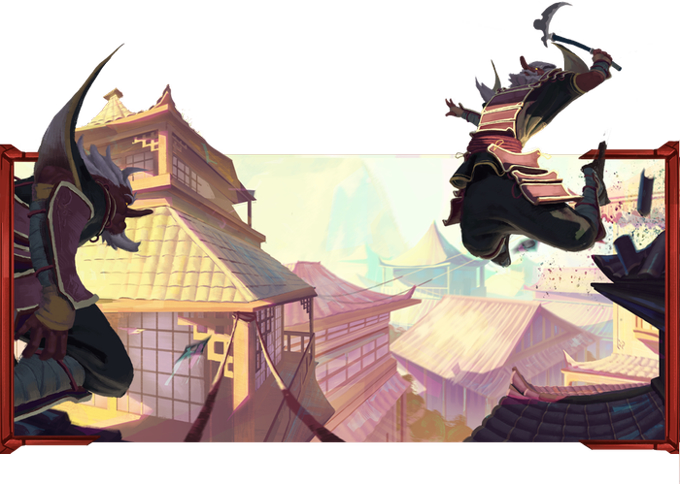
Explore lands inspired by east Asian mythology in the 3rd party setting of the Yokai Realms.
Created with an extremely heavy dose of east Asian, mythological inspiration, Ryoko’s Guide to the Yokai Realms is a fantastical toolbox and partial setting supplement for D&D 5e. It gives players a load of character options while giving DMs the tools to create epic set pieces and boss fights.
You’ll find inspiration drawn from the likes of Avatar, Godzilla, traditional mythology and loads more. But there’s lots to love, even for more western tastes.
The guide was created by Loot Tavern and Will Earl of DnD Shorts, launching in Feb 2025. It’s also one of the most successful 5e supplements on Kickstarter with over 31,000 backers.
Below I’ve delved into everything you can expect from this 385 page supplement of epic scale!
Overview
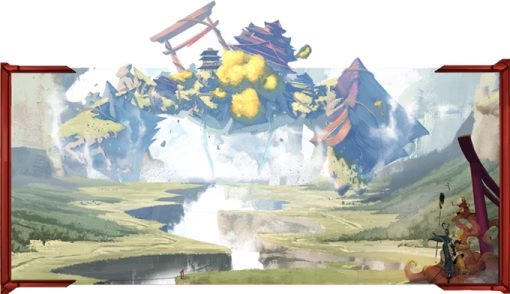
Ryoko’s Guide isn’t a setting guide in the traditional sense. It’s presented more as a loose toolbox of options that can be picked from in an existing campaign, or lifted wholesale for a Yokai realm themed adventure. But from the off, it’s clear that it’s up to players and DMs how they use the resources.
The book is divided into three sections:
- New Mechanics: Rules for kaiju battles, advanced weapon techniques, combo attacks, harvesting, and crafting
- Player Options: Includes new races, subclasses, a full new class, backgrounds, feats, and prosthetics
- The Toolbox: A selection of new monsters, magic items, spells, familiars, and lore.
Folklore & Inspiration
Ryoko’s Guide draws heavily from a mixture of Japanese folklore, myth and even pop culture. Eagle-eyed players will no doubt spot loving homages to their favourite animes throughout. Some of these influences include;
Yokai: Spirits, demons, and monsters, often tied to natural forces or forgotten rituals of myth.
Shinto and Buddhist cosmology: The role of shrines, purification, ancestor spirits, and reincarnation present in these religions are felt throughout the supplement
Kaiju cinema: Particularly inspired by Godzilla, Gamera, and Pacific Rim. Huge monsters and the epic battles with them are central to play in the Yokai realms.
Anime archetypes: Elements from Naruto, Princess Mononoke, and Demon Slayer influence design choices and tone of the book
It’s important to stress the book doesn’t just copy these sources. It reinterprets them as loving tribute, encouraging players to explore these themes rather than imitate them.
Character options
Races
Ryoko’s Guide introduces 10 new playable races, each inspired by Japanese myth and folklore.
- Kitsune: Trickster fox spirits that can shift forms between humanoid and vulpine. Known for being free spirited in life and evasive in battle
- Tengu: Tricksters descended from mountain spirits with distinctive faces and long noses. Well suited to martial roles with access to gliding abilities that speed them around the battlefield.
- Oniborne: Similar to tieflings in appearance, they are the children of oni demons. These characters often face prejudice and grow more demonic and powerful over time.
- Fuyōren: Inspired by yuki-onna and winter spirits. They are graceful, haunting, and command magic based on the season they are born in.
- Haniwa: Clay guardians inhabited by the spirits of fallen warriors, bound to protect places of significance. Stoic, literal and immune to certain mental manipulations.
- Ryokido: Original to the setting, these chi-focused nomads share physical characteristics with cats and turtles, boasting telepathic communication among their many talents.
- Hanamori: Plant-based beings, often protectors of sacred groves or cursed forests. Able to manipulate plant life and draw on a boost of power tied to the seasons.
- Enkoh: Mountain dwelling fire-spirits made flesh, Enkoh have the appearance of apes and are able to conjure combustion and gouts of flame.
- Tatsumi: Tatsumi are elegant fish like people who can in times of stress transform into a new dragon like form.
- Isetsu: Crustacean defenders of the deep, the massive Isetsu boast natural shell armor, claws and uncanny luck that make them mighty close combat warriors..
Backgrounds
The guide introduces 3 new background options, well suited to the spirit realm:
Backgrounds include:
- Kaiju Scholar: Trained to study titanic kaiju threats and survive battle with them.
- Wandering Exorcist: A wandering spiritual nomad who banishes evil yokai.
- Artificer-Priest: Engineers who mix magic with emerging technology to honor ancient spirits of legend.
Classes & Sub-Classes
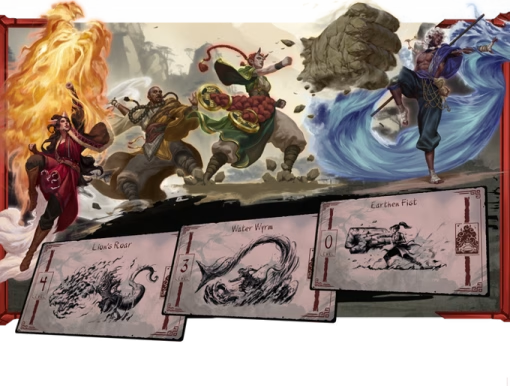
New Class: The Bender
This class feels like a tribute to Avatar: The Last Airbender and an answer to the mediocre monk subclass Way of the Four Elements.
Players can create a martial artist character that summons the power of the elements across four disciplines, revolving around motion, combo chains, and versatility:
- Ferocity (offense)
- Fortification (defense)
- Fusion (combo elements)
- Invigoration (support and buffs)
It seems like a really flexible class, ideal for a player who likes hand to hand combat, but it’s looking for a way to vary their approach to battle.
New Class: Tamer
There’s no simple way to put this, the tamer is a Pokémon trainer. The class centres on catching and rearing the monsters you encounter on your journey to fight on your behalf.
The CR of the monsters you can tame increases over time, and as you journey together you can teach your companion special moves and increase their fighting ability.
While this class might wear it’s influences on it’s sleeve, it looks really effective and a different take on the theme of the beast master ranger.
New Subclasses
Each existing class has a new subclass option:|
- Barbarian: Path of the Kaiju – Channel the primal force of the massive kaiji to strike with incredible force in battle.
- Bard: College of Masks – These duplicitous entertainers change their faces and abilities by swapping masks. Imagine the way Link does this in The Legend of Zelda: Majora’s Mask.
- Bard: College of Hanabi – Fireworks artisans who use their tools of the trade to deadly effect in combat
- Cleric: Shrine Warden – Staunch defenders of the sacred yokai shrines
- Druid: Circle of the Yokai – Add more to the wildshaped repetiore by transforming into Yokai beasts.
- Fighter: Skeletal Blade – Always be for-armed with a fighter who can manipulate and grow deadly weapons from their own skeleton.
- Monk: Way of the Eight Gates – Hand to hand fighters who unleash hidden physical potential by pushing through the chakra gates that hold our bodies in check.
- Paladin: Oath of the Yojimbo – Wandering warriors pledged to protect the weak and powerless wherever they are.
- Ranger: Rōnin – Exiled swordmasters, wielding blades with precision and specialising in the art of the dual
- Rogue: Tamaya — Tricksters who have become expert in explosives
- Sorcerer: Spirit Caller — Channels bonded yokai spirits to enhance abilities and for support in battle
- Warlock: The Shinigami — Bound to death gods patrons, manipulating fate and taking control of enemies
- Wizard: Shinobi — Ninja-mages who blend stealth and sorcery to deadly effect.
Kaiju battles

Fierce combat with Kaiju’s are the crown jewel of this supplement. These epic confrontations play like a mix of raid bosses and puzzles. Shadow of the Colossus players will recognise the idea of scaling the monster before finding a way to slay it.
Chaos Threshold
Kaiju don’t use standard hit points. Instead, they have a Chaos Threshold — a stress gauge that builds until they go berserk and enter Rampage Mode. Each time a kaiju is hurt outside of its “vulnerable areas,” its Chaos Threshold depletes.
Vulnerable Areas
To slay a kaiju, players need to target specific vulnerable areas (e.g. heart, wings, underbelly). Each has its own AC stat and HP pool. Some of them can’t be struck until the kaiju is provoked or damaged in specific ways. Players may need to climb it to find others.
Death Throes & Finishing Blows
When all vulnerable areas are depleted the kaiju enters a Death Throes phase, gaining stat bonuses and becoming more erratic in its behaviour as it fights to survive. To win, players must deal a Finishing Blow (a big burst of damage) before it unleashes a massive catastrophe.
Movement & Mounting
Players may need to scale the kaiju and brace themselves to avoid being thrown off. The book supplies detailed movement and environmental interaction rules, turning kaiju into an ever shifting battleground.
Death Rattles
The death of a kaiju leaves lingering effects on the world. These may include necrotic storms, cursed landscapes, or even the birth of new monsters where it feels years later.
Experience System
XP from kaiju encounters is milestone-based, with XP given for:
- Depleting the Chaos Threshold
- Exploiting vulnerabilities
- Delivering the final blow.
Ready to start your journey?
Ryoko’s Guide to the Yokai Realms is a real milestone in third-party 5e design and at least as compelling as anything Wizards of the Coast has released in years.
It balances mechanical innovation with storytelling and cultural references to make a fun setting for anyone looking for a fresh take on D&D.
Even if you aren’t a big fan of anime or Japanese culture, the mechanics alone are really innovative and worthy consideration to add to your game.
Recommended For:
- Players who love anime, mythology, and monster movies
- DMs seeking cinematic, high-stakes encounters
- Groups looking for non-Western fantasy settings