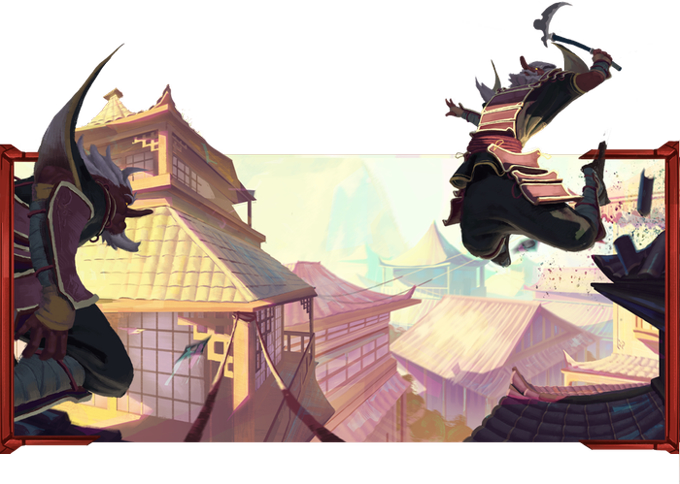
Explore new sub-classes presented in Ryoko’s Guide to the Yokai Realms
Ryoko’s Guide to the Yokai Realms introduces a range of subclass options, each offering a unique way to channel spiritual power, manipulate shadows or bargain with otherworldly forces. From warriors who fight alongside animated corpses to assassins who strike from magical darkness, there are Asian myth and anime inspired options.
But which of these choices is right for your character? This guide breaks down all the major Yokai Realms subclasses, highlighting their strongest features, evaluating their overall power to help you decide.
Path of the Kaiju – Barbarian

What is it?
The Path of the Kaiju Barbarian channels the power of colossal kaiju through their rage specialising in two things; facing kaiju head-on (climbing them, targeting body parts, surviving their attacks) and channeling their power (embodying specific kaiju archetypes: dragons, leviathans, titans, insects, or storms).
Key abilities
When you adopt this path, you select one of five kaiju to draw power from. You can change your selection whenever you gain a Barbarian level, each aspect defines a distinct combat role:
- Ascended Dragon – A repeatable AoE option is great for Barbarians, allowing them to deal with swarms, and getting around the common Barbarian issue of mostly dealing with one foe at a time.
- Eternal Leviathan – This is effectively a taunt mechanic keeping enemy attacks focussed on the Barbarian. Not bad if your party has a lot of squishy spellcasters, but one of the more tepid Aspects.
- Titan Earth – Using your Con modifier in place of Str for strength checks, attack rolls, and damage rolls enables some unique Con based builds, where your Barbarian can get durability and power out of maxing out one stat. Especially great if you want to pick up some feats as barbarians usually need to optimise for the trio of strength, dexterity and constitution.
- Armored Kabuto – A really simple extra damage option (2d8) that is ideal for players looking for something low maintenance.
- Infinite Tempest – Another simple option, but this helps avoid getting outnumbered by multiple enemies, similar to the Ascended Dragon, but uses lightning damage rather than radiant,
The apex hunter ability grants medicine and survival skills fairly negligible benefits and being able to Brace while fighting a kaiju is very specific but decent when fighting a kaiju.
The Kaiju Force ability gained at level 6 allows your Barbarian to grow in size, which comes with a longer offensive swing and the added bonus of adding your Barbarians Con modifier to all Strength checks and saves. Also weapon attacks deal an extra 1d4 damage. Overall these are useful for anything a Barbarian wants to do, get to the enemy faster and deal more damage.
At 10th level, you manifest a fully-fledged kaiju form. And can choose one transformation (this choice is permanent). You can pick the same kaiju as chosen for your Aspect of the Kaiju or a different one for a hybrid build.
- Ascended Dragon Form – You and your gear take on a liquid-like form that can slip around the battlefield more easily, moving through creatures and making them more difficult to grapple.
- Eternal Leviathan Form – You take on a translucent and ghostly form gaining resistance to cold and necrotic damage and able to slip through any creature’s space.
- Titan Earth Form – Become huge, gain extra reach (5ft) and deal more damage on weapon attacks (for a total of +2d4 from Kaiju Force + this feature).
- Armored Kabuto Form – Sprout insectoid wings, gaining flying speed and applying disadvantage on opportunity attacks against your Barbarian.
- Infinite Tempest Form – Gain resistance to lightning and thunder damage and quickly run through enemies, applying lightning damage to one target you touched.
While raging and at or below half your HP maximum your Barbarian gains extra movement and an additional attack with the Rampage feature. More interesting however is the ability to choose a failed save becomes a success a number of times equal to half your Con modifier. Uses regained on long rest. Not the most complex ability, but still impactful.
How strong are they?
The Path of the Kaiju ranks at the top of the Yokai realms subclasses.
At Level 3, your Barbarian already gains access to one of five high-impact, build-defining powers, which can be swapped at every Barbarian level. This means every level increase is a potential semi rebuild, offering you the chance to change your character for what works with the campaign.
Mobility, damage and AoE capabilities are all available. By the time 10th level comes along there’s even more powers to layer on top, making this subclass even more adaptable. These negate the more one dimensional aspects of the Barbarian, the Path of the Kaiju can easily slip around the battlefield, hit hard and even stay standing on a thrashing titan. The subclass is similar in strengths to the Path of the Wild Heart Barbarian, and can also change build as it levels up.
5/5
College of the Hanabi – Bard

What is it?
The College of Hanabi Bard merges invention with performance. These bards wield fireworks, firearms, and craftsmanship as extensions of performance and magic.
Key abilities
3rd Level grants the Journeyman Inventor feature.The extra skills and use of artificers tools are functionally useful, if a bit unexciting. More unique is spending inspiration to pass tool checks, helping your Bard have the best chance to whip up the gadget they need. This is a little niche, but with this at your disposal you may put yourself in the situations to use the tools more often in creating devices that solve the party’s problems.
Pyrotechnics allows your Bard to create a number of fireworks equal to their proficiency modifier once a day, with effects that range from blinding or frightening opponents, to temporary flight speed. They are quite versatile, providing reaction, action, and bonus action options for both offense and defense. They aren’t highly damaging, but scale modestly with proficiency bonus as it grows.
At 6th Level Firework Display makes even more use of your minor explosives, you can spend 10gp of fireworks to create a magical 1-minute light show imbued with emotional magic. You can choose the right option to push NPC’s to the emotion you want them to feel. It’s useful to some extent, but feels like a long way round to making a persuasion roll easier in most cases. But it does have the potential to inspire riots, calm mobs, or sway social dynamics – if used creatively and with DM cooperation.
The Fireworks Display ability is powered up with capstone ability Master of Illusions, affecting more creatures in a more potent fashion. Again, this is not terribly powerful and requires some imagination from the player and cooperation from the DM. Plus, at the end of it you still need to make your rolls.
How strong are they?
The College of Hanabi Bard is a creative and thematic subclass that shines in the right campaign. Mechanically, a bit situational but does reward creative solutions. It’s stronger early on but will be outscaled later as other party members unlock their biggest combat abilities. The notable features of the subclass feel a little redundant as they are still largely about influencing people, which a Bard is already quite effective at.
The artificer-ish abilities just don’t feel like they would be impactful session to session. Artificer tools don’t end up being used terribly often. Overall, there’s just not much here that feels like it would impact the game in a meaningful way, even if the flavour is fun.
2/5
College of Masks – Bard
What are they?
The College of Masks Bard draws inspiration from traditional Eastern theater, particularly Noh and Kabuki mask traditions. Instead of dazzling audiences with fireworks like the College of Hanabi, this Bard channels their magic through mystical masks that embody different aspects of emotion and power.
Key Abilities
Nogaku conjuration allows your Bard to summon a mask as a bonus action, with a number of different effects. These range from a Hellish Rebuke like effect to supporting allies attacks. It’s a bit of a step up from the Hanabi Bard’s firework ability, as it more directly affects battle outcomes.
Inspiring performance acts aspre-combat inspiration for the party and is an excellent preparatory support tool, boosting morale and improving early encounter positioning. Passing out temporary hit points and a boost to initiative seems like a no-brainer to add to any pre-combat prep to.
Stagecraft comes at level 6 and you can effectively teleport to creatures swapping their position, a useful battlefield trick. In certain fights this will ruin enemy positioning and make it hard to keep advantage over your party. In some cases it won’t be as effective, such as fights against one big enemy. But it definitely has its uses against an opposing party of enemies.
The capstone ability comes at level 14, Grandiose Transformation. The Bard’s masks evolve, gaining powerful new effects, in similar themes to the originals. These transformations reinforce the subclass’s flexibility, defensive resilience, and even add a limited frontline capability.
How strong are they?
The College of Masks is a very solid support class. Its tools are well positioned to help allies in multiple ways, from buffing their attacks to battlefield control. None of these are gamebreaking, but the subclass is quite efficient and focussed. There is something they can help with in most situations, on top of what a Bard offers as standard. Stagecraft is the most interesting new addition and quite different from what any other Bard offers.
3/5
Shrine Warden Domain – Cleric

What Is It?
The Shrine Warden Cleric merges traditional cleric abilities with ritual practices inspired by Eastern folklore. It captures the flavour of a holy guardian tending to sacred shrines, using blessings and curses to keep balance between good and evil spirits.
Key abilities
The subclass revolves heavily around its Channel Divinity: Consecration feature. This ability allows the cleric to create a mini shrine that radiates blessings or curses in an area.
It’s a fantastic AOE feature, essentially functioning as a buff or debuff field, that is by far the best use for Channel Divinity by this subclass most of the time. There are multiple selectable effects: supportive blessings like Blessing of Fortune (sort of a limited Bless spell), Blessing of Power for damage boosts, and Blessing of Hope for morale. There are even small defensive bonuses or offensive curses that inflict status effects on enemies.
The Blessings are pretty versatile, the Curse of Pain is ideal for an encounter when you are surrounded by foes, hitting them for 1d8 necrotic damage when they enter the aura for the first time or start their turn in the aura. Blessing of Power is ideal for when your allies are on the offensive when an ally in the aura hits a target with an attack roll, it can deal an extra
1d6 radiant damage, making the party’s turns more impactful.
Enrapture is really useful as an early level feature pushing enemies or stemming their movement, which you will likely use to keep targets within the shrine’s aura.
At 6th level, the Cleric can summon a Shrine Guardian, a tiny fey creature who can help allies and hinder enemies, but more importantly can move the shrine up to 20 ft, keeping the right combatants in the aura.
Empowered Consecration at 17th level provides a fantastic capstone for the subclass, adding 10ft to the aura’s radius and granting access to all three blessings or all 3 curses at once.
The subclass has a really strong core identity, and a clear purpose as it really all hinges around the shrine. It gives the party a clear sense of battlefield coordination, something to keep the party in a set formation supporting each other. The Shrine Guardian is quite flexible, able to add to your party’s offensive capacity, safeguard from status effects, or damage enemies closing in on the party.
However, the class’s success remains tightly linked to good team coordination and battle tactics.
How strong is it?
The Shrine Warden is a strong subclass that benefits from party coordination.
If the party plans well, staying within the shrine’s aura and leveraging its buffs, they can gain the maximum benefits from the Shrine Wardens abilities. By level 6 the Shrine Warden can move the shrine to grant the party more options in making the most of the aura and move around.
The subclass’ strength lies in controlled engagements, where movement and positioning are easier to predict. In more dynamic or chaotic battles, its limitations will probably be on show. Overall it’s a great Cleric option that can flourish with good teamwork.
4/5
Circle of Yokai – Druid

What is it?
The Circle of the Yokai druid takes the class’s connection to nature and pushes it into something a bit broader. Instead of simply calling on animals, these druids form bonds with supernatural spirits – the yokai. They act as a kind of go between for the physical and spiritual world.
Key abilities
The signature ability here is Yokai Wild Shape. Normally, druids can only turn into beasts, but this subclass allows you to transform into Yokai forms that include select Celestials, Fey, Fiends, Constructs, Monstrosities, and Plants, essentially any yokai or spirit creature your DM approves.
A bit like a 2024 druid you keep your ability to speak but also gain advantage on concentration saving throws and can even cast certain spells while in Wild Shape (those without a somatic component). These features give the druid a nice balance of physical protection from wildshape while keeping the ability to act as spell caster.
At 6th level, Empowered Transformation ties everything together. You can immediately Wild Shape as a reaction after casting a spell, keeping your momentum from magic to physical combat. While concentrating on a spell, your attacks count as magical, which encourages you to stay actively casting spells while in yokai form. If you happen to lose concentration, then there are concentration spells you can cast in wild shape form, like haste to regain these benefits. This creates a nice set of actions to follow in combat; cast a spell, transform, fight.
Wild Shaping as a reaction is also tied into the ability. This is strong because it eliminates the usual loss of tempo. Normally, transforming costs an action or bonus action (for the Circle of the moon druid), forcing Druids to choose between casting a spell or entering a combat form. The Yokai Druid can do both in the same round: cast a meaningful spell first, then immediately transform without sacrificing momentum.
It also greatly improves survivability and concentration. You can cast a concentration spell and then instantly shift into a tougher or more mobile yokai form, protecting yourself before enemies can respond. Combined with advantage on concentration saves while transformed, reaction Wild Shape lets the Yokai Druid maintain spells more reliably than other Druids, turning Wild Shape into a reactive, defensive tool rather than a commitment.
By 10th level, Beckon the Yokai gives you Animate Objects once per long rest for free, letting you literally call spirits into weapons, furniture, or pieces of the battlefield. This is quite fun, and feeds into this Druid’s ability to keep a concentration spell going, while getting stuck into physical combat, this time alongside an animated sidekick.
At 14th level, Yokai Fortification offers some great staying power. If you drop to 0 hit points in Wild Shape, you can instantly shift into another form and stay in the fight. Plus, you get to do a bonus action attack after casting a spell, keeping up the pressure on enemies.
Yokai wildshaping
The Druid of Yokai opens up your wildshaping options to include some new creatures that exist outside of the usual ‘beast’ prerequisite. They stick to the usual CR restrictions associated with your Druid level. Below are some recommendations for wildshape forms from Ryoko’s Guide to the Yokai Realms
Levels 2 – 3 – Max C/R – ½
You unlock Wildshaping at level 2, you can choose the standard array of beasts (up to CR ½) or consider Yokai options under the same CR restriction. The most potent option is the only CR ½ choice, the ball-like spirit; Betobeto-San, its main selling point being that it can turn invisible until the end of the turn (or until it attacks). This comes on top of decent melee attacking ability and an ability that frightens a target if they fail a DC 13 saving throw.
Level 4 – 7 – Max C/R – 1
The fiery Kasha are a good option here, with the option to multiattack and combine it with a trait where they set themselves on fire and deal an additional 2 damage per hit. This form also has the ability to frighten enemies on a DC 13 saving throw. The Kawawappa is not nearly as good in melee but can breathe underwater if such an ability is needed.
Level 8 – 11 – Max C/R – 2
By this level you Druid unlocks the ability to Yokai form into flying creatures, with all the innate exploring and infiltration tactics that come from that. The animated Kite, Hone Karakasa has fairly standard damage potential for creatures of the C/R level, but is very useful for its ability to fly, transfer its flying ability to others and has a very long in combat swing if the weather outside is stormy (doubling its flight speed). The Kappa is interesting, able to breathe underwater and adept at grappling opponents. It has advantage on the athletics check to trigger a grapple and doesn’t reduce its speed to drag a grappled creature.
Level 12 – 15 – Max C/R – 3
The Omukade Spawn are natural predators to Dragons, and quite a formidable wildshape. They can grow one size (maxing out at Huge) when they take one of six types of elemental damage, boosting the reach of their attacks. They can also coil around an opponent, keeping them grappled and dealing decent damage each turn the target remains in their clutches (2d10 +3). The wheel demon Wanyudo is a good option too, with a few physical damage resistances and the ability to build up speed to add more damage to its already formidable attacks.
Level 16 – 19 – Max C/R – 4
The Jade Komainu has great physical stats and stands out for its ability to blast enemies within a 30ft cone and possibly banish them to a random location 6 miles away. The Komainu rolls 12 d6 and can banish enemies with total hit points equal to the rolled amount. The Nue is one the most physically damaging combatants available, able to make 3 attacks per turn. However all creatures (friend or foe) have to take a 1d6 penalty to attacks, ability checks and saving throws, so they are a two edged sword.
Level 20 – Max C/R – 5
The Dodomeki is an intriguing option, less combat capable than some top shelf wildshape forms, but packaged with some interesting abilities in sensing valuable objects nearby, eat coins for temporary hit points and turn invisible for one minute. The crustacean Ushi-Oni is the better combat option here, highly durable (115 HP) and able to grapple an enemy after attacking them following a DC 15 constitution saving throw.
Is it any good?
The Circle of the Yokai feels like a strong and versatile druid subclass. It retools how Wild Shaping works, adding a lot more flexibility to what you can morph into and what you can do while transformed. There’s a bevy of interesting wildshape choices from the Yokai creatures and the ability to retain more choices while in wildshape will make this version of druid feel quite different, even to players who have played a different subclass before.
While the top end Yokai options are interesting but not terribly powerful. However the options at lower level have quite niche abilities that could be useful when the party has less options available in terms of skills and spells.
The subclass promotes a fun active playstyle with good flavour for the setting. It’s not just a strong druid, it’s a druid that feels quite different to what other subclasses offer.
5/5
Skeletal Blade – Fighter
What is it?
The Skeletal Blade Fighter takes the fighter’s battle mastery and gives it a body horror twist, granting them direct control over their own bones, using them as both armor and weapons. This ability references the fierce bone swordsman Kimmimaru seen in Naruto, a ninja so powerful that his only real weakness was a degenerative disease.
Key abilities
At 3rd level, Malleable Physique provides some disguise utility, interesting for infiltration but it’s more of a roleplay perk than a combat tool. The real power of the subclass kicks in with Skeletal Form, which defines the subclass. The fighter can grow bones into weapons and armor, and gain a customisable set of benefits like extra reach, speed, AC, or temporary hit points and more importantly you can swap these benefits as a bonus action. This gives the Skeletal Blade a fun playstyle where you can adapt every round depending on what’s happening in combat.
The built-in weapon scaling (going from 1d8 up to 1d12 as they level up) and the ability to treat your bone weapon as magical means you’re less reliant on your gear. Combined with Ryoko’s expanded weapon mastery system, you can also apply special strike effects, letting your skeletal weapon behave like a mace, greatsword, or rapier depending on your chosen setup.
As the class levels up, Osseous Prodigy and Skeletal Knight expand those customisation options even more. You can maintain multiple bone adaptations, add resistances, grow wings for flight, or even add necrotic or piercing damage when grappling.
By 10th level, the class becomes highly modular – the player can effectively build their ideal loadout as the battle progresses. Later features like One With Nothing (bringing the Fighter back after death on 1hp) and Living Weapon (stacking up multiple skeletal benefits) add survivability to make a really durable fighter that is rarely out of options.
Is it any good?
The Skeletal Blade offers a great sense of versatility and control over your build, with situational buffs that let you adapt to almost any fight. Its flexibility and flavor make it an interesting Fighter option, that is powerful enough to compete with the best of the subclasses for the class.
5/5
Way of Eight Gates – Monk

What is it?
The Way of the Eight Gates is the ‘chakra-unlocking’ monk, drawing clear inspiration from martial-arts anime where fighters open internal gates to push their bodies past mortal limits, like Rock Lee in the manga Naruto.
Each gate represents a different aspect of themselves, physical, emotional or spiritual, and unlocking them grants new powers.
Unlike many monk subclasses that revolve around a single core mechanic, this one scatters its benefits across multiple gates, giving you a pick and mix of thematic upgrades as you level up.
Key abilities
At 3rd level, you open your first three gates, Earth, Water, and Air, and each gives a different type of boost.
- Gate of Earth adds a passive ability: any time you use the Monk abilities Patient Defense or Step of the Wind, you regain health equal to your Wisdom modifier. It’s not huge, but could heal you a couple of times per battle for a handful of HP.
- Gate of Water is one of the the bigger early power boosts, just giving you extra ki equal to your Wisdom modifier. Monks can never have too much ki, so this alone makes leaning harder into Wisdom feel super rewarding, especially in lower levels when you have less ki and you can skew wisdom to +3/4 with the right stat allotment
- Gate of Air lets you spend ki to taunt an enemy, forcing disadvantage on attacks against your allies. With the extra ki from Water, you can actually afford to use this, and it gives monks a pseudo-tank angle that’s normally not part of their build. While Monks are not that hardy, they are very mobile. Having enemies chase you around while you hit and run, rather than actually drawing them all to fight you could be quite disruptive to an enemy game plan.
At 6th level, you gain more gates to open:
- Gate of Flame adds more damage throughout: once per turn, you can tack on an extra unarmed strike to your Flurry of Blows. It’s limited to your Wisdom modifier per long rest, but it’s still a nice burst tool when you need it.
- Gate of Presence is a softer, more roleplay-oriented perk that lets you add your Wisdom modifier to all Charisma checks. Depending on the campaign and party make up, this ranges from ‘nice to have’ to ‘surprisingly useful’ but it doesn’t tie into anything else in the kit. Monks don’t usually have face skills so this could come in useful in a pinch.
At 11th, you get two more upgrades:
- Gate of Spirit lets you spend ki to support allies, granting temporary HP and giving them a reaction to attack, dodge, or reposition without provoking opportunity attacks. It’s a fantastic utility feature, especially for squishier casters who need to escape melee, getting big damage attackers an extra attack or getting Rogues into position for a perfect sneak attack.
- Gate of Mind grants a free casting of Telepathic Bond per short or long rest, to keep a team in touch, coordinating movements remotely.
Finally, at 17th level you unlock Gate of Infinity, the subclass capstone. By spending 6 ki points, you enter a temporary super charged state; faster movement, higher AC, an extra unarmed strike with your Attack action plus bonus Wisdom to attack and damage rolls. It’s undeniably strong, especially since by this level you’re full of ki points thanks to Gate of Water.
Is it any good?
The Way of the Eight Gates gives you a steady stream of genuinely strong features, extra ki, taunting tools, support options, bonus attacks, skill boosts, and a flashy transformation ultimate ability.
Each gate feels great on its own, while they don’t build into a totally cohesive playstyle the way many other subclasses do. You get a lot of buttons to press that don’t all work together but present you with a lot of options.
For players who love the fantasy of unlocking inner potential step by step, this hits the flavour perfectly. Mechanically, though, it’s a bit scattered compared to more tightly synergised subclasses.
5/5
Oath of the Yojimbo Paladin
What is it?
The Oath of the Yojimbo is built around the archetype of serving as an unwavering bodyguard. Its tenets reflect a philosophy inspired by Bushido, focusing on protection, personal strength, and absolute self-sacrifice.
The subclass leans heavily into this theme, and even its spell list reinforces the identity. Earth Skin, Steel Skin, Warding Bond and options like this support tanking, repositioning and keeping your allies alive. Overall, this feels like a paladin who shapes the battlefield around the act of protecting someone else.
Key abilities
The subclass comes into its own as soon as you unlock its Channel Divinity options. Holy Ward lets you choose an ally, giving them immunity to being frightened and allowing you to channel radiant damage through their weapon attacks. It’s a powerful twist, especially when paired with someone who makes regular, reliable weapon strikes. It can feel like having a second smite engine that triggers off someone else’s success. However, this does expend spell slots, so be wary of leaving some for the Paladin too.
The other Channel Divinity, Guardian’s Intervention, lets you reduce incoming damage to a creature within 30ft and potentially set up a counterattack if the damage is reduced to zero, offering some good damage reduction and a possible extra attack for a hard hitter or sneak attacking rogue.
Instead of an aura, you get Daring Protector, which allows you to move toward an enemy and force an attack onto yourself when an ally is threatened. It keeps you in motion and encourages a tanky playstyle where you physically come between squashy mages and their attackers. The limitation to melee attacks matters though, as you won’t always be able to count on this to keep less durable party members safe. However, like most of these abilities, it’s a good use of a reaction, but Paladins have 3 uses for their reaction (opportunity attacks, shield of faith and some channel divinity features), so there’s a lot of conflict here for action economy.
At higher levels, the subclass leans harder into that identity. True Guardian lets you use Lay on Hands or the Help action as a bonus action. Being able to pump out Lay on Hands in the middle of a tense fight is extremely valuable, especially once your pool is large enough to make big swings in survivability. And the enhanced Help action adds a reliable boost to an ally’s next roll.
The capstone, Ultimate Protector, turns you into a short-duration bastion of defense. Boosting your allies’ AC, preventing your ward from falling unconscious, stacking radiant damage on your own attacks, and freely using Guardian’s Intervention all make you feel like the party’s personal bodyguard. The ability to refresh it with a high-level slot is a nice bonus for campaigns that actually reach level 20.
Is it any good?
The Oath of the Yojimbo has a very clear design, and in the right party could be very useful in keeping less durable melee classes (eg. Rogues or Monks) safe. It is effective at protecting others, but this does come at the cost of resources that could be used on attacking (eg. spell slots, channel divinity).
If your party already has a complement of main melee attackers, this will probably be a good fit. It’s quite a defence focused subclass that uses a lot of actions in keeping others safe, so you may consider a different subclass if your party is in need of a more dedicated damage dealer.
The biggest challenge with this subclass is that it has a lot of costs in channel divinity and spell slots and a lot of conflicts in action economy. The features themselves are really good, but they do prevent it from being among the best Paladin subclasses.
4 / 5
Ronin – Ranger
What Is the Ronin?
The Ronin Ranger is built around the vibe of a lone warrior, the kind of wandering swordsman who follows no code but their own. For flavour, it leans into the image of the mercenary samurai who fights using whatever tactics get the job done. The subclass clearly tries to channel cinematic samurai moments, especially the dramatic draw and strike sequences seen in classic films and games. This emphasis on sudden, explosive blows shapes the whole subclass, giving the Ronin a distinct identity compared to more traditional ranger archetypes.
Key abilities
The Ronin’s defining gimmick is its interaction with drawing and stowing weapons. The idea is stylish, but in practice it seems quite fiddly. The extra damage on attacks made with a weapon drawn that turn is nice, but tracking the exact timing of draws and stows can easily become a bit busy. I can imagine many players would probably ignore the micromanagement and just treat the feature as a flat damage boost, which works fine.
Defensively, the Ronin has the Cleaving Parry option that can deliver a decent AC boost if you’ve invested heavily in Dexterity or Strength. It also grants temporary hit points, which is a nice touch. Again, the ability technically ties into the weapon-stowing gimmick, but it effectively works even if you ignore the flavor and just treat it as a reaction-based defensive booster.
At mid-levels, the Ronin picks up reliable advantage on its first melee and ranged attacks with Multi Weapon Mastery. This feels strong, and it even lets you fire ranged attacks in melee with no disadvantage. With clever weapon swapping, the subclass can gain advantage consistently. The problem is you no longer have a stowed weapon to draw for your reaction and the ranged attack doesn’t get the damage boost. However this may work well with a dual wielding build. Under this you can use a pair of handaxes, not need to stow them as you throw one of them and still make attacks with your bonus action. You then have free hands for reactions.
The capstone feature Relentless Onslaught grants bonus attacks every time you critical hit or slay an enemy. Combined with its built-in advantage on first attacks, this could actually snowball into very explosive turns, if you target a small weak enemy first. It’s exciting when it works, but in practice won’t happen all the time, but as a dual wielder you could increase those odds.
Is it any good?
The Ronin sits in a very middling place. Nothing about the subclass is weak, but nothing pushes it into standout territory. The best features are pushing it into a specific dual wielding direction to make best use of the subclass.
Overall, the Ronin is a solid but unremarkable option, functional, flavorful, and occasionally interesting yet ultimately defined more by flavour than by quality mechanical design.
3/5
Tamaya – Rogue
What is it?
The Tamaya Rogue takes the classic sneaky operator and turns them into an explosives expert, blending fireworks and magical early technology into a style that feels halfway between a saboteur and a pyrotechnic performer.
Instead of casting spells directly, the Tamaya crafts spellbombs that store spell effects and detonate on command. The result is a rogue that controls the battlefield with smoke, sound, light, and elemental forces.
Key abilities
At 3rd level, the subclass opens with a pair of features that the subclass is built around. Pyrotechnician grants proficiency with magitech firearms and artisan’s tools, which is already a fun twist for any rogue who wants to dip into guns. The Magitech weapons referred to here offer stronger damage than any other weapon option for a Rogue, and are compatible with sneak attack for maximum damage. Note that Magitech weapons aren’t featured in the Yokai Realms supplement – you need to access another Loot Tavern book (L’Arsene’s Ledger) for a full selection.
The extra tool proficiency also gives you access to a range of craftable utility items from Ryoko’s system. This allows you to make smoke bombs and other gadgets that support infiltration plans.
The heart of the subclass is Spellbombs. You craft tiny orbs that store spell effects, powered by a resource called Hanabi Points. These bombs can replicate a surprisingly deep spell list ranging from basic utility like fog cloud or faerie fire to battlefield control spells like web, darkness, hypnotic pattern, or even high-level effects such as ice storm or cloudkill as you level up.
What makes them useful is flexibility. You aren’t technically casting the spell, the bomb is, which means you can hand bombs to allies, prep multiple effects ahead of time, and let the bombs maintain ‘concentration’ for you.
As such, you can effectively ‘maintain concentration’ on multiple concentration spells at once, by detonating multiple bombs with stored concentration spells. For example setting off one with the spell Darkness and another with Entangle has the unique potential to trap enemies in darkness unable to fire out of it, without disadvantage.
It’s worth looking at the action economy here too. Throwing the bomb costs a bonus action and it’s a reaction to detonate the bomb. So this saves your action for other things, like attacking. However Rogues do often use their bonus action for disengaging or hiding, so it’s worth planning your turn carefully, or handing bombs to bonus action shy allies like barbarians and fighters.
With the right loadout, you can set up ambushes and choke points with some prep time. The only limit is your hanabi point budget, which scales at higher levels.
Initiative Shift at 9th level lets you hit a huge area with a burst of light and smoke as soon as initiative is rolled, dropping enemy initiative by a brutal -10 if they fail their save.
At 13th level, Spellbomb Adept makes the Tamaya immune to its own bombs and automatically successful on their saving throws, which lets you drop things like flashbang or cloudkill right on top of yourself without worry. Worth noting you are not immune to all the effects of the bombs, for instance a bomb casting magic darkness would hinder your character as normal. You also gain the ability to detonate bombs up to 1,000 feet away, enabling long-range ambushes or remote-trigger setups without putting yourself at risk. The ability to set up very long range ambushes feels quite unique to the subclass.
Finally, Hanabi Primer at 17th level gives you an IED style super-bomb you can plant on surfaces or hide inside objects. It’s customisable, nearly invisible, and can be keyed to a wide range of triggers. When it goes off, it deals a combination of thunder damage plus elemental damage in a fireball sized radius. The tradeoff is setup time; this bomb is incredible, but only if the party has the opportunity and coordination to prepare the battlefield ahead of the encounter.
In terms of value, the spirit bomb is the equivalent of a level 7 fireball, but only costs 3 hanabi points. That represents excellent value. And it’s a less resisted damage type in force damage.
I’d also say that it takes an action to set. You could lay it down as an action, set to detonate in 3 seconds (or however long is reasonable to end your turn) and move out the way. You may need to be clever with triggers, but this can be used without prep time, but only if you’re able to get in and out of a crowd. Maybe having the fey touched feat or being Eladrin will let you misty step away.
Is it any good?
The Tamaya Rogue feels strong in the hands of a creative player, blending utility, control, and burst damage in a way that feels unlike any other rogue subclass. Its power comes from planning, positioning, and clever bomb usage rather than raw hitting power. The ability to hand bombs to allies, stack multiple control effects simultaneously, or reconfigure your bomb choices between fights gives the subclass a strong strategic edge.
At low and mid levels, the combination of faerie fire, grease, sleep, web, darkness, or shatter makes your character a real menace for enemy parties.
Higher-level bombs add big-impact options that a rogue would normally never touch. The biggest limitation is your reaction economy, because you must detonate bombs with your reaction, you can only trigger one per round, which keeps things from getting too wild.
The subclass does rely on teamwork to hit its ceiling, especially when it comes to setup-based features like Hanabi Primer. In a coordinated group, the Tamaya becomes an S-tier ambush specialist capable of starting fights on their own terms. In a more chaotic party, it still performs well, just without the same tactical power.
Overall, the Tamaya Rogue is creative, flexible, and surprisingly powerful, especially for players who enjoy planning, crafting, and blowing things up with style.
5/5
Spirit Caller – Sorceror
What is it?
The Spirit Caller sorcerer is all about turning your own soul into a weapon. Rather than summoning an external creature or shaping raw magical energy, you project your spirit, which fights, scouts, and channels your spells.
This gives the subclass a distinct identity compared to typical sorcerers. Instead of standing at the back and flinging spells, the Spirit Caller feels more like a battlefield partner to their own soul, bouncing actions between themselves and their spirit.
Key abilities
The manifested spirit is the heart of the subclass. It is durable for a companion, it scales with level, has a flexible action loop, and deals consistent damage with melee or ranged spell attacks. Because it takes its turn right after yours, it is easy to coordinate positioning and set up spells too.
The fact that you get two uses per short rest is a big deal. You can feel free to summon the spirit fairly liberally and you are able to use concentration spells while it is summoned, so it can defend you from attacks that might break that concentration.
Spirit Synchronicity allows you to cast spells from your spirit’s position, which can be useful. It allows for safer use of touch use spells, and lets you ignore a lot of the limitations of short range spells too.
Spirit Empowerment is the ability that really brings the Spirit Caller to life. Spending sorcery points for tailored spirit upgrades gives you a huge amount of build flexibility. Some highlights include:
- Resistance keeps the spirit alive and protects you later at higher levels.
- Extended Stay doubles the amount of time the spirit is present for (from 10 to 20 minutes)
- Enlarge offers a noticeable damage bump, turning the spirit into a bit of a battlefield control tool.
- Teleporter improves action economy and positioning.
- Frenzy is a high risk, high reward offensive option
- Detonator makes losing the spirit something enemies actively fear.
- Of One Mind and Devil’s Sight let the spirit handle scouting and awareness far better than most sorcerers can.
- Enhanced Agility and Battlefield Squire add mobility and support value.
Overall, these boons let the subclass adapt to the party and situation, hitting harder, surviving longer, scouting better, or enabling allies in battle. Generally speaking, I can see most of these being useful
Explosive Emergence allows you to front load the spirit’s first turn with an extra action that allows it to make an impact quickly. Combining this with boons like Enlarge or Frenzy can create explosive openings in combat. However, the best time to summon the spirit is before combat, as it takes an action, a precious resource in battle. This is sometimes not possible so can be a bit awkward to do when under fire.
Gaining the spirit’s resistances is another strong upgrade. Sorcerers need any durability they can get their hands on.
Final Form Manifestation is a substantial capstone. Dropping concentration necessity entirely makes the spirit dramatically more reliable, and the free extra boon each time you summon gives you more freedom to hold onto sorcery points for your actual spells. Large size as a baseline option gives the spirit even better reach and space control.
Is it any good?
The Spirit Caller sits comfortably on the middle end of sorcerer subclasses. The spirit itself delivers steady damage, provides a second body for positioning and opens up tactical options sorcerers usually don’t have. Being able to cast through the spirit makes spell sniping safer and lets you bypass many typical sorcerer constraints.
Its real drawback is resource tension (since sorcery points want to be used for a lot of things), and the reliance on the spirit’s survival early on. But overall, the Spirit Caller ends up feeling like a sorcerer with a reliable summonable tank, and a spell relay beacon, all rolled into one.
In short, the subclass is versatile, and fun, especially for players who like managing a companion that grows with them.
3/5
Shinmegami – Warlock
What is it?
The Shinigami Warlock is built around the idea of forming a pact with a spirit of death, with some light allusions to the manga Death Note.
It feels like the version of a ‘death pact’ Warlock, leaning into reaping, puppeteering, and manipulating mortality.
Key abilities
The signature feature, Grim Puppeteer, is where the subclass defines itself more. Being able to take control of a corpse or an unconscious creature at level one feels quite strong, and the feature only grows more impactful as you level up. The real value is seen when the party focuses on a tough target in combat to let your Warlock animate it, turning a defeated threat into a short term ally.
Shinigami Vision is a useful feature. Instantly learning a creature’s vulnerabilities and resistances is helpful for the whole party, and it provides information that can change the direction of a fight.
As you level up, the subclass doubles down on strengthening your puppetry. Sharing self targeting spells with your puppet, seeing and speaking through it, or using it as a remote infiltration tool. This offers a lot of out of combat utility in puppeting bodies as a decoy or scaring NPCs. These abilities open the door to scouting, spying, and creative problem solving that can really alter how encounters play out.
The level 14 feature, Master of Death, is particularly powerful, staying active after hitting zero hit points, continuing to act as a spirit, and puppeteering your own body gives you an extra buffer that can buy vital time for the party. Depending on your build this could net you an extra 70 temporary hit points and renews on a short rest, so you don’t need to be shy about putting yourself at risk knowing you have this feature as insurance.
Is it any good?
The Shinigami Warlock is not just stylish, but mechanically strong. The subclass performs well on its own, but looks like it scales well with a coordinated party. In a group that focuses on taking down big threats so you can seize control of them, the Shinigami could be extremely powerful. An inventive player can gather information and disrupt enemy forces in creative ways using animated corpses too. Overall it feels like a great balance of flavour and power and offers open ended abilities for outside combat that will result in fun roleplay and puzzle solving.
5/5
Shinobi – Wizard
What is it?
The Shinobi wizard is a martial caster that plays nothing like a traditional spell slinger. Instead of hanging back and dropping fireballs, the Shinobi leans into ninja fantasy, slipping through shadows and weaving magic directly into blade work. It’s kind of a mix between a Rogue, a Bladesinger, and a Gloomstalker, creating a wizard that thrives on ambush tactics and big sudden bursts of damage.
Key abilities
The early Shinobi Training ability does a lot of heavy lifting. The ability to use Light armour, finesse weapons, thrown weapons, hand crossbows, stealth proficiency and darkvision together build a foundation that feels distinctly roguish. Being able to use a weapon as a spellcasting focus also smooths out item juggling a little bit.
Shadow Striker is the engine that defines the subclass. On every hit you can use a spell slot to deal extra damage that grows as you level up, then use one of several techniques on top. It feels like the structure of a rogue’s sneak attack, but replaces it with a magic element
This feels like it has a lot of possibilities. You could obscure yourself in self made smoke of magical darkness, poison and debuff an enemy, teleport through dim spaces for perfect positioning, or gain temporary damage resistance. Each option reinforces the ninja part of the subclass’ identity, and having all of them tied to the same damage trigger makes this feel quite straightforward.
At tenth level the subclass expands on Shadow Striker with more powerful options through the Umbral Striker ability. You can now do things like create illusory doubles to misdirect attacks, turn invisible or even make additional attacks. This is interesting and effective but probably doesn’t compete in terms of raw power with other level 3 spells like fireball or hypnotic pattern. As such it’s best used in more specific situations.
Shadow Savant is the capstone that turns your magical darkness into a weapon. By restraining enemies whenever they enter or begin their turn in your shadow field, you almost gain free battlefield control without spending extra actions. It works really well with the darkness synergy the subclass builds towards in earlier levels and feels like a nice graduation on those abilities. It would be helpful to also cast the Darkness spell to extend your reach further and obscure enemies, making it harder for them to close in on you.
Is it any good?
The Shinobi wizard feels like it could be on par with the Bladsinger, offering a different take on a wizard that echoes the spell casting ninjas of the Naruto manga. The subclass consistently reinforces its theme and gameplay loop, giving you a set of abilities that allows you to strike like a rogue while still benefiting from the full depth of the wizard spell list. It addresses the usual wizard weaknesses in clever ways by adding armour and stealth solutions that support its aggressive strengths.
Its main limitation is the wizard’s hit die. You are much more fragile than most frontline classes, so positioning and timing is quite important. But the subclass provides lots of evasive tools, and enough ability to fight from within magical darkness, that the risk becomes quite fun and a good way to balance all the offensive tool. It’s worth noting like any Wizard, the Shinobi is a glass cannon, the magical darkness is a great disguise, but it won’t make them any more durable, you want to avoid taking a hit at all costs.
4/5
Which is the best Yokai Realms subclass?
The Shinobi Wizards feels like a standout that balances efficiency with a strong sense of theme, balancing everything around striking from the darkness they can create. Path of the Kaiju Barbarian also feels like a good choice, with lots of options to create a really mobile hard hitting berserker. The Shinigami Warlock looks strong and arguably feels like a more interesting, efficient version of the Necromancer, a decent class that takes a few levels to really get into the death theme. The Circle of Yokai Druid also feels fresh, with the ability to cast spells without a somatic component, play a wealth of interesting wildshape choices. These should serve to make it feel like a different Druid experience than other subclasses, without veering from its core strengths.
Overall Ryokos Guide to the Yokai realms has a lot of flavourful options that feel distinct from their forgotten realms counterparts, and while some feel more flash than bang, there are a handful that stand out as powerful options for any campaign.