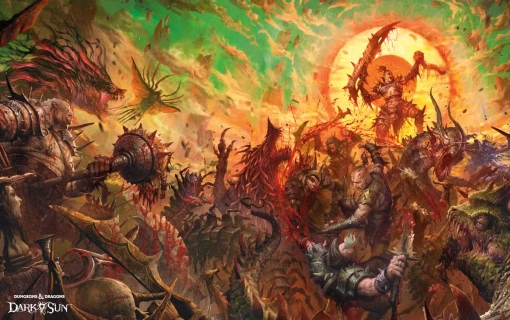
Embrace undeath by becoming a lifeforce stealing death knight.
World of Warcraft has some similarities with D&D when it comes to classes, but there are also some very different options. One of those is the death knight. D&D doesn’t really have an equivalent when it comes to character options (though death knights do exist as antagonists).
However, death knights are the antithesis of paladins. For this reason, if you want to play a death knight in D&D: World of Warcraft, you take the paladin class and the oath of the ebon blade subclass. The subclass then changes some of your paladin features to more death knight inspired features.
In essence, this is a subclass that also has a few alterations to the base class so I’m going to tackle this as a subclass guide and cover off those extra changes to the paladin class too.
My guide below will take you through tactics and optimisations when playing an oath of the ebon blade death knight for D&D 2024.
At a glance
- Half caster, half martial class
- Tank class capable of taking a beating
- Can drain enemies of their vitality
- Can either enhance weapon attacks or become even more resilient
4/5 – The oath of the ebon blade is a pretty good subclass, hampered a little by some lesser versions of paladin features and having to dedicate to a certain type of magic. There is a lot of flexibility here though and overall, this balances out into a good, but not amazing subclass with lots of choice.
Oath of the ebon blade features

Death coil (Lv1) – 3/5
Replaces lay on hands
Being undead can have some niche benefits. For instance, hold person won’t affect you but hold monster will (but that requires a higher level spell slot) so this is a sometimes handy change. Your death coil acts like inverted lay on hands. You deal damage instead of heal, though you can heal undead (including yourself). If you can have some undead summons in the party, this can be used to heal them (and you do get summon undead as a spell).
The damage is interesting. You’re probably looking at a pool of 3-6d8 (depending on your charisma). You’ll need to use a bonus action to activate it which gets in the way of something like divine smite. The damage can be similar though, but divine smite deals full damage and you only expend it if you hit, death coil requires a saving throw still but does deal half damage on a pass. If you miss your attacks, but really need to deal damage, then this could be an option.
The amount of hit points affected is generally going to be lower than lay on hands. Lay on hands will grant 5HP of healing for every paladin level. So this will have more at level 1, but usually, you’re meant to start playing at level 3, at which point, lay on hands is probably beating death coil on pure volume. This will get larger with levels with a paladin maxing out at 100HP healed and a death knight at 6d8 (average of 27).
I think lay on hands is better. That secondary healing option is just really useful and it’s more profound too. Death coils decent though, and definitely more thematic.
Runic smite (Lv2) – 4/5
Replaces paladin’s smite
This is almost exactly the same as paladin’s smite except it deal necrotic damage and there’s only an extra damage increase against celestials rather than fiends and undead. Radiant is generally resisted less than necrotic and fighting fiends or undead will be more common than fighting celestials. That makes this slightly worse than paladin’s smite, but still a good feature, and again, more on theme with the death knight class.
Oath of the ebon blade spells (Lv3) – 4/5
| Paladin level | Spells (all) | Spells (blood) | Spells (frost) | Spells (unholy) |
|---|---|---|---|---|
| 3 | Death grip | Vampiric blood | Chains of ice | Scourge strike |
| 5 | Death and decay | Spiritual weapon | Frostscythe | Ray of enfeeblement |
| 9 | Summon undead | Leeching strike | Remorseless winter | Bestow curse |
| 13 | Freedom of movement | Evard’s black tentacles | Ice storm | Blight |
| 17 | Circle of power | Bonestorm | Cone of cold | Contagion |
There’s a decent amount of choice of spells here, but the challenge is you’ll have to match it with the rune you inscribe on your weapon. The unholy list is the worst with scourge strike being a solid option as a smite alternative, but you can easily pick up a different smite spell. The rest just aren’t great.
For the frost list, chains of ice is a low damage, speed reducing option that’s only just about OK. Frostscythe is much better as a slightly better shatter alternative. Remorseless winter is a fireball alternative with a better damage type, some speed reduction and a larger area at the cost of a couple of d6 of damage. In fact, with ice storm and cone of cold as well, you have quite a few AoE options that death knights ordinarily wouldn’t have access to.
For the blood list, vampiric blood is pretty decent if you’ll be healed a fair bit (and you can do this yourself with death coil and some later spells) but will demand your concentration. Leeching strike is the same damage as blinding smite at the same level, but you get some healing at the same time. Bonestorm is an alright emanation, but the area is kind of small. Evard’s black tentacles is also good but I’m not sure spiritual weapon is worth the concentration and bonus action cost for a death knight.
Overall, it’s a good list with frost being the best list, followed by blood and then unholy. Since frost has the worst rune (see the next feature), I’d be tempted to stick with blood (which has the best rune) unless you really want a paladin wielding AoE spells.
Runeforging (Lv3) – 5/5
One of these runes is much better than the others. Blood will grant some serious temporary hit points and it’s capable of replenishing quite regularly, depending on what you’re facing and how often you can land the killing blow. Paladins are built for damage so that should be reasonably common.
Frost is quite clearly the worst option. 1d4 is a paltry boost to damage and cold resistance isn’t that common. You’ll also need to be dual wielding and unless you have nick mastery, will have that light weapon attack disrupted by other bonus actions like runic smite (in fact, I’d definitely recommend using smite mastery if this is the route you go).
Unholy is a little better with higher average damage, less building around it and it will work on attacks of opportunity too.
While not all options are equal, the best options are really good making this a top feature.
Runic power (Lv3) – 4/5
Some decent effects from your channel divinity and it doesn’t require any expending of action economy which is useful. There’s perhaps slightly less power to these channel divinity uses as a result, but death knights are a little overwhelmed with options for their action economy already.
There are use cases for all of these depending on what you’re facing but I’d say unholy is only good when you have a really important saving throw to inflict quite soon. Blood’s healing is regularly useful and frost’s AoE damage is good when attacking in crowds.
Faithful steed (Lv5) – 3/5
In addition to the regular benefits of faithful steed
Making your steed undead allows you to heal it with death coil which is occasionally useful. Making its otherworldly slam deal necrotic damage does almost nothing as your steed won’t normally make attacks.
Passing through solid objects for a turn can be really useful though. You only get this once per long rest, but it’s excellent for escaping deadly battles or chasing after fleeing enemies or even just finding more direct routes to enemies. However, it is only once per long rest.
Aura of deathly endurance (Lv7) – 5/5
This is very similar to the oath of the ancient’s aura of warding. 3 damage resistances is a lot for increasing durability. The fact this affects allies in your aura is even better making this an excellent party resilience feature.
Runic strikes (Lv11) – 5/5
Replaces radiant strikes
This is basically exactly the same but instead of dealing radiant damage, you now deal necrotic damage. It’s still really good though. An extra d8 per hit is going to go a long way and will do even more damage for a dual wielder who might be making 3-4 attacks per turn.
Improved death coil (Lv14) – 4/5
Replaces restoring strike
Restoring strike would allow you to heal from a bunch of conditions with lay on hands as well. I’d say that’s better than being able to deal more damage or heal a bit more overall. This is still decent though.
The healing will be more profound than the damage though so I’d be inclined to use it more to self heal. Especially as you could just use 1 die and rely on the extra healing of your death knight level for the main healing. This will let you make the most of the healing available.
Runic mastery (Lv15) – 4/5
You’re tied to the rune inscribed on your weapon for this so it’s a shame that blood is quite poor here. You’re basically transferring damage from someone else to yourself. I guess the point is if you’re using blood, you’re an extra resilient paladin and can afford to take more damage, but it still feels a tad weak.
Frost does some solid AoE damage. 8d6 is basically a fireball but with a different AoE.
Unholy’s summon undead with a tougher summon that doesn’t need concentration is really good too. You can also heal this summon with death coil and could in theory, summon 2 undead by casting this twice.
Aspect of the horseman (Lv20) – 2/5
This gives you a load of flexibility for your runic power and runic mastery. Runic mastery can only be used once unless you expend a level 4 spell slot which is a reasonable exchange. Runic power is also limited by your number of channel divinity uses so again, you’re not going to be using these loads.
For a capstone feature, I think this is a bit underwhelming, especially as it probably only works during a single encounter. Flexibility is decent, but not enough for the subclass capstone.
How good is the oath of the ebon blade?
The oath of the ebon blade death knight is an interesting subclass. Thematically it works for the death knight, but in doing so, it makes some of the core paladin features worse. At the same time, the subclass itself has some great features (tarnished only a little by a weak capstone that most players won’t reach).
Paladins are a strong class though so can afford some slight weakening, especially when the subclass is on the higher end of power levels.
Overall, I think this is a pretty great option and has quite a lot of choice. I also really like that there’s some unique ideas being thrown around here (likely inspired by WoW character options).
4/5
Building an oath of the ebon blade death knight

D&D: World of Warcraft actually gives a lot of build advice, but this is mostly geared towards creating a character of a certain specialisation. There are 3 specialisations for the death knight (blood, frost and unholy) but these are mostly helping you replicate a WoW character of that kind of build, not how to make a properly optimised character.
You can ignore those specialisations and that’s what I’m going to do, looking more at what makes a good ebon blade build.
For now, I don’t have full access to all the character options in WoW but will update this section once I have full access to these and can provide more options. I’ve also included options from other 5.5e books as I don’t see a reason why the oath of the ebon blade and death knights can’t be used in any D&D setting.
Ability scores
Recommended options
- Strength: Strength weapons will hit harder so tend to be your best option, especially when it’s so easy to whack some heavy armor on and ignore dexterity.
- Constitution: Death knights are tanks and built to take a beating. You’ll want constitution nice and high to help you survive on the frontlines.
- Charisma: Important for your spellcasting and your face skills.
Options to avoid
- Dexterity: This can be an option and you could dump strength instead, but if you’re using a frost rune, you’ll have to go for strength anyway and I’d say that a dexterity build will generally be sub-optimal on a death knight anyway because of the lower damage.
- Intelligence: Almost pointless.
- Wisdom: Also rarely needed by a death knight.
| Ability score | Point Buy | Standard Array |
|---|---|---|
| Strength | 15 | 15 |
| Dexterity | 8 | 10 |
| Constitution | 15 | 14 |
| Intelligence | 8 | 8 |
| Wisdom | 8 | 12 |
| Charisma | 15 | 13 |
Skills
Recommended options
- Athletics: You’re better off with this than acrobatics as a strength-leaning class.
- Insight: Strong face skill.
- Intimidation: Decent face skill if you intend to roleplay in a more imposing manner.
- Persuasion: Your best face skill and should be top of your list as a potential party face.
Species
There are a few things to consider when choosing a species for an oath of of the ebon blade death knight:
- Resilience: Anything that can toughen you up as you throw yourself into the midst of your enemies will be beneficial.
- Innate spellcasting: As a spellcaster, you can repeat cast spells and your charisma should be strong enough to do this well.
- Damage dealing: You’ll likely be making a lot of attacks so anything that can enhance this will be useful.
Recommended options
- Aasimar: Resistance to necrotic and radiant damage increases your durability, though you will gain necrotic resistance at level 7. For celestial revelation, inner radiance is a little tricky as you’re such a big team player and it will hurt allies so necrotic shroud is probably your best bet. Temporary flight can be useful, especially out of combat or for hard to reach enemies. The healing can make a decent backup, especially as you won’t be able to heal most allies.
- Changeling (FotA): If you want to be incredibly persuasive and make impersonations, then a Changeling is a great route to go. You can change shape, get more face skills and have advantage on face skills.
- Dragonborn: You don’t get much in the way of AoE damage as a death knight (unless you take the frost rune), but you will like getting close to your enemies. This makes a Dragonborn’s breath weapon a really useful tool. You can use it in place of just one of your attacks too. Temporary flight again lets you get to hard to reach enemies. Plus there’s a resistance for better durability.
- Dwarf: Be the tankiest tank around with extra hit points, poison resistance and advantage on saving throws against the poisoned condition.
- Goliath: Faster movement is handy for getting into battle quickly. Your giant ancestry grants some very useful options too. For a death knight, the durability of the stone giants and extra damage from fire giants are both great options.
- Human: A great option if you want to be the party face and need the extra skill proficiency (deception might be a good choice). You’ll also get an extra origin feat and a regular supply of heroic inspiration is always useful
- Orc: Not only can you survive a bit longer as an Orc, you can also charge even further with a bonus action dash. Handy for a character that will often want to charge into combat quickly.
- Warforged (FotA): I’m not sure how a Warforged becomes a death knight, but nothing says they can’t be one. You’re really here for extra durability like the AC boost and poison resilience.
Backgrounds
Primarily you want to focus your background on increasing key ability scores (mainly strength, constitution and charisma) with the associated origin feat and then skill proficiencies being your next priority. As such, I’d suggest the below are your best backgrounds for an ebon blade death knight:
| Name | Ability scores | Origin feat | Skill proficiencies | Tool proficiency |
|---|---|---|---|---|
| Charlatan | Dexterity, constitution, charisma | Skilled | Deception, sleight of hand | Forgery kit |
| Cosmic Dawn experiment (AU) | Strength, dexterity, constitution | Transmuted anatomy | Athletics, survival | One kind of artisan’s tools |
| Entertainer | Strength, dexterity, charisma | Musician | Acrobatics, performance | One type of musical instrument |
| Farmer | Strength, constitution, wisdom | Tough | Animal handling, nature | Carpenter’s tools |
| Flaming fist mercenary (HoF) | Strength, constitution, charisma | Tough | Intimidation, perception | Smith’s tools |
| Ice fisher (HoF) | Strength, dexterity, constitution | Alert | Animal handling, athletics | Woodcarver’s tools |
| Merchant | Constitution, intelligence, charisma | Lucky | Animal handling, persuasion | Navigator’s tools |
| Noble | Strength, intelligence, charisma | Skilled | History, persuasion | One type of gaming set |
| Purple dragon squire (HoF) | Strength, wisdom, charisma | Purple dragon rook | Animal handling, insight | Navigator’s tools |
| Rashemi wanderer (HoF) | Strength, constitution, charisma | Tough | Intimidation, perception | Cartographer’s tools |
| Soldier | Strength, dexterity, constitution | Savage attacker | Athletics, intimidation | One kind of gaming set |
| Vampire devotee (ABoH) | Strength, constitution, charisma | Vampire’s plaything | Persuasion, stealth | Cook’s utensils |
| Zhentarim mercenary (HoF) | Strength, dexterity charisma | Zhentarim ruffian | Intimidation, perception | Forgery kit |
Feats
At 1st level, you can grab an origin feat through your background and from level 4, you can pick up a general feat (or another origin feat if you want) instead of an ability score increase.
Below are some feats I’d recommend for an oath of the ebon blade death knight:
Origin feats
- Alert – Taking your turn earlier is always useful.
- Lucky – More ways to be reliable at important rolls is universally beneficial.
- Magic initiate – A couple of extra spells to cast gives you a bit more utility and you can repeat cast the 1st level spell.
- Musician – A universally great feat for dishing out heroic inspiration. Great for altruistic death knights. Plus you can ensure you have some heroic inspiration available too.
- Savage attacker – Decent enough damage dealing feat to make your attacks a little more powerful.
- Shadowmoor hexer (LFL) – Hex is good on a high attack class. Paladins don’t always have loads to concentrate on and the extra damage to the target of your hex when they hit you is decent.
- Skilled – You aren’t able to be proficient in all face skills, but party faces typically need a bunch of these so skilled can help fill your skill gaps.
- Tough – Lean into your strengths and become even more durable.
- Transmuted anatomy (AU) – Faster speed is good for closing down enemies and improved constitution saving throws can help with your concentration.
- Vampire’s plaything (ABoH) – A free healing potion each day and the option for bonus action dash or disengage can help you move around a bit better.
General feats
- Abjuration adept (AU) – Grab some great protective spells like shield and lesser restoration and hand out temporary hit points when you cast them. Great for altruistic death knights!
- Bloodlust (ABoH) – Some great self healing in the midst of combat. You have some fairly good hit dice anyway and this makes a better use of hit dice than just using them during a rest, especially as you get a boost from your constitution too.
- Conjuration adept (AU) – Between summon undead and conjure animals, you’ve got a couple of spells you really want to maintain concentration on (though you may eventually be able to cast summon undead without concentration). Add in some pretty solid spells like entangle and misty step and this is a great feat.
- Defensive duelist – Good for some reactionary defence. You will likely sacrifice some damage output, but if you’re going for sword and shield anyway, you can just grab a rapier for damage equal to a longsword.
- Fey touched – Misty step and another spell you can repeat cast plus free castings is pretty good.
- Great weapon master – More damage from your attacks is great if you intend to wield heavy weapons. Especially good if you’ve inscribed an unholy rune on your weapon.
- Heavy armor master – Basically reduce damage from all bludgeoning, piercing and slashing attacks is great for a tank if you’re going to be wearing heavy armor anyway.
- Inspiring leader – Great for granting temporary hit points to the party. Go for the charisma increase to make this work best.
- Mage slayer – Best against mages, but having what is practically legendary resistance is also great.
- Magic connoisseur (AU) – A couple of extra spells known is handy and this opens up a bunch of options like blindness/deafness, shatter, suggestion and web. You’ll get a free casting of each spell you learn too.
- Mounted combatant – You can easily summon your own mount from level 5 onwards and this can give you a serious edge in combat. Advantage against basically anything medium or smaller is pretty nice for landing more attacks.
- Polearm master – Great for making more reaction attacks and something like the unholy rune will work again on an attack of opportunity as it will be a new turn. You have quite an overburdened bonus action, but when it’s not already being used for something else, you can make bonus action attacks too.
- Sentinel – Another way to get more opportunity attacks and more damage with an unholy rune. Will also keep enemies within your range and away from others.
- Shield master – Better protection from some nasty AoE damage spells and a free push or prone with your shield can free up your weapon mastery for something else.
- Skill expert – If you want to get really good at a face skill, then this works great.
- Spell resistant (AU) – Great for some extra resilience through a damage resistance (maybe grab poison or fire) and some improved saving throws against magic.
- Zhentarim tactics (HoF) – Expertise in a skill (probably a face skill) and easy opportunity attacks is great for increased damage and interacts nicely unholy rune.
Weapons
Death knights can be capable with a wide range of weapon approaches, but primarily, you’ll be using strength and want to be using melee weapons. Have some thrown weapons available so you can make ranged strength attacks when you can’t reach melee.
Part of the decision on weapons comes down to the rune you choose for runeforging. Frost will push you down the dual wielding route which means taking light weapons while unholy will push you down the heavy weapon route. Blood will work with any weapons though.
I’m not much of a fan of frost, but dual wielding can be a good approach if you build around it. Check out my dual wielding guide for some advice around this.
When it comes to which weapon to choose, this will primarily come down to the amount of damage the weapon causes and the weapon mastery associated with it. Check out my weapon mastery guide for more advice on this.
Armor
Death knights have a lot of ability scores to focus on so building into dexterity is tricky. With that in mind, I’d generally go for heavy armor. Plate armor is best, but you can grab splint armor until you have the money for plate.
Grab a shield if you want some extra durability at the expense of some damage output.