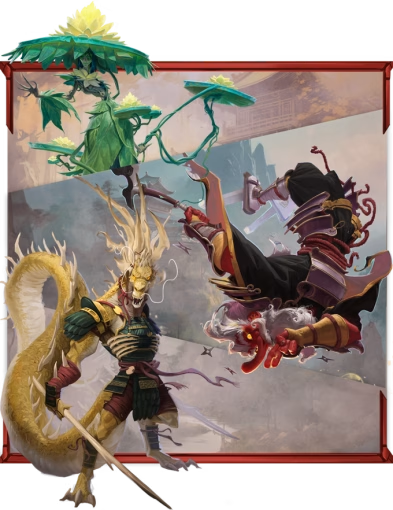
Learn how to optimise a Shifter with our guide.
What are Shifters?
Shifters are humans that have somehow been granted animalistic attributes to their biology. No one is entirely sure how they were created but many suspect they are the descendants of Humans that were perhaps altered by magic somehow, or more likely, the descendants of Humans infected with lycanthropy.
In either case, Shifters are capable of transforming their bodies temporarily to take on more animalistic traits such as a hairier body, claws, fangs and other similar attributes. Not all Shifters are related to the same animal either. Some take their attributes from wolves, bears, rats or many other types of creatures which provides some variety in the abilities they gain.
They are not lycanthropes though, so the bite of a Shifter will not turn someone else into a Shifter. Nor are they affected by the moon or any of the other curses associated with lycanthropy. They are their own separate race and have full control other their animalistic form (though it certainly does affect their inclinations).
Shifters were introduced as a playable race in D&D 5e in Eberron: Rising from the Last War and were updated for Monsters of the Multiverse. While originally an Eberron specific race, they can easily be incorporated into any setting you like. Our guide below tells you everything you need to know to play as one of these animalistic races.
Is a Shifter the right race for me?
Dungeons and Dragons lets you take a flexible approach to building a character, but if you’re going to stick to typical culture and the best-optimised build for a Shifter you might consider the following:
Choose a Shifter if you like…
- Extra hot points
- Enhancing yourself with animalistic traits
- Playing as a sort of lycanthrope
A Shifter might not be for you if…
- You intend to stay far away from combat
- You like urban spaces
- You don’t want to be driven by animalistic influences
If you think a Shifter isn’t for you, not to worry, there are dozens of playable races for you to pick from, just check out our races guide to find out about all of them. For an alternative tough race, you could consider a Goliath or an Orc.
Shifter racial traits
| Ability Scores | +2 to one ability score and +1 to another or +1 to 3 different ability scores |
| Creature Type | Humanoid |
| Size | Medium |
| Speed | 30ft |
| Languages | Common and 1 other |
| Traits | Bestial Instincts, Darkvision, Shifting, Beasthide, Longtooth, Swiftstride, Wildhunt |
| Proficiencies | One of; acrobatics, athletics, intimidation or survival |
| Resistances | None |
| Daekvision | Yes |
| Innate Spellcasting | None |
| Book found in | Monsters of the Multiverse, Eberron: Rising from the Last War |
Tactics
Your approach to playing a Shifter is really down to which bestial ability you take on. All Shifters do get temporary hit points when using their shifting ability, meaning no matter your bestial ability, you can rely on a Shifter being tougher. You can try the following approaches for each of the different bestial abilities:
Beasthide: Even more temporary hit points and extra AC means beasthide is your go to for tanks. Wade into combat and soak up some extra damage. Of course more HP and AC is good for anyone and may be worth considering for less tough martials like monks and rogues.
Longtooth: One for strength based martials only. Dedicated spellcasters, ranged warriors and Dex based martials will get little out of this. But if you’re wielding a shield or a two handed weapon, you don’t need your hands to bit people so can focus on higher damage or protection while using your bonus action for an extra attack. Mostly only fighters, barbarians and paladins are likely to get much out of this one.
Swiftstride: Great for characters that want to be faster or get out of trouble easily. Handily, using it to escape nearby enemies only takes up a reaction which are rarely needed and allows the likes of rogues, monks and artificers to get out of the way while still using their bonus action for other things. Tougher classes can make use of it too, though you’re less likely to make use of it with ranged characters, though it could make a solid contingency plan.
Wildhunt: Again, frontline warriors are likely to get the most useful out of this ability. Wisdom saving throws are some of the more common and preventing advantage on attacks is great for frontline characters that might get flanked or have other things happen to them.
Which class should you choose?
Fortunately, with a variety of bestial abilities, Shifters can work reasonably well for most classes. However, their abilities tend to work best on martial classes.
Below I’ve put together a score for how well each class works with a Shifter based on how well the racial traits work with each class:
Artificer⭐⭐⭐⭐⭐
Barbarian ⭐⭐⭐⭐⭐
Bard ⭐⭐⭐
Cleric ⭐⭐⭐⭐
Druid ⭐⭐⭐
Fighter ⭐⭐⭐⭐⭐
Monk ⭐⭐⭐⭐
Paladin ⭐⭐⭐⭐⭐
Ranger ⭐⭐⭐⭐
Rogue ⭐⭐⭐
Sorcerer ⭐⭐
Warlock ⭐⭐⭐
Wizard ⭐⭐
*Star ratings scored out of 5
Which class is best for a Shifter?
Mainly we’re looking at dedicated martials as the Shifter’s abilities lend themselves well for those on the front lines. Beasthide for more tankiness, longtooth for more attacks when your hands are too full for an offhand weapon, swiftstride for hit and run tactics and wildhunt as an alternative form of resilience.
With that in mind, I’d recommend the following classes as your best options:
- Artificer
- Barbarian
- Fighter
- Paladin
Most of these for the obvious approach of frontline martials. For artificers to work best as a Shifter, take a battle smith or armorer and either go beasthide for extra hardiness or swiftstride for hit and run tactics.
Worst classes for a Shifter
Your worst options are those without any martial capabilities which are really wizards and sorcerers.
If you do want to play one of these combinations, beasthide is probably your best options. More HP and AC is still alright on these classes. You could choose swiftstride as a contingency escape plan, but you might as well just take misty step.
About Shifters
Description
Shifters look a lot like Humans but they do have some very distinct animal features to accompany their mainly Human forms. All Shifters are different however and are influenced by different animals. Some may have hairier bodies, oddly coloured eyes or various features that match their associated animal. It’s up to you to decide what animal features your character takes on, though these features should be inspired by a single animal rather than a variety of animals.
When a Shifter channels their animalistic form though, these features become far more distinguished and obvious. They might grow fangs, claws, whiskers, hair or have their body alter in a variety of ways to enable their animalistic abilities. This form can’t be held for a long time (about a minute), but the transformation can be useful in moments of great need.
Personality
While Shifters aren’t controlled by animalistic needs, this heritage does hold sway on their personality. Most Shifters tend to be fairly independent beings, eschewing society and instead, working by themselves or perhaps with a small pack of others (normally other Shifters).
Shifters tend to be affected by heightened emotions that they prefer not to tame. This can be a source of conflict, but also tends to mean that what you see is what you get with them. While they will at times enjoy the company of others, they do tend to enjoy the freedom of independence.
How to roleplay as a Shifter
Leaning into your animalistic features is important when playing as a Shifter. Consider what animal your Shifter is influenced by to help determine your personality. For example, if you’re influenced by a rat, you may operate with more subtlety and may be more skittish. If you’re influenced by a bear, you may be more proud and bold. It’s up to you how your animal side influences your personality.
You may also want to consider how you get on in social situations. You likely dislike cities and may also struggle in social situations. An adventuring group shouldn’t be much of a problem for a Shifter though. Most Shifters that work with an adventuring party tend to treat them as their pack.